Cast iron cookware is loved by many home cooks. It is strong, heavy, and cooks food very well. People have used it for hundreds of years. Many families still pick cast iron because it feels safe and natural. These pans stay loved for their strength and long life. People choose cast iron as a lasting and trusted cooking tool.
In this blog, you will learn:
- What cast iron is
- Why it is good
- How to use it
- How to clean it
- How to choose the right one
The language is easy. The ideas are simple. But the guide is full of value.
What Are Cast Iron Pots and Pans?
Simple Meaning
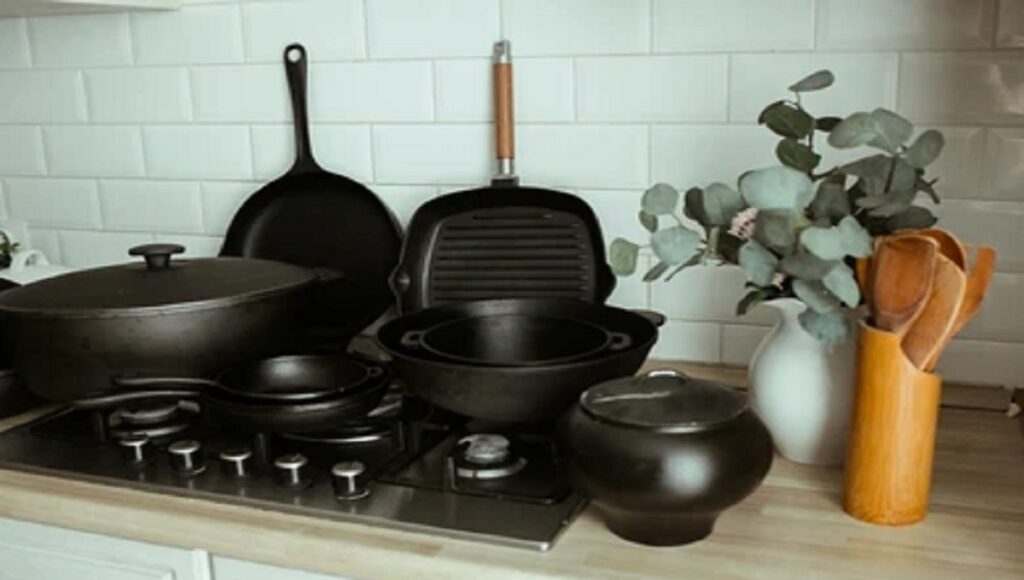
Cast iron pots and pans are made from melted iron poured into a mold. When it cools, it becomes a strong and heavy pan.
Why People Love Cast Iron
- It gets very hot
- It cooks food evenly
- It lasts a lifetime
- It becomes non-stick after seasoning
- It gives food a special taste
- It works on gas stoves, electric stoves, induction stoves, and even campfires
These benefits make cast iron great for daily cooking.
Types of Cast Iron Cookware
1. Cast Iron Skillet
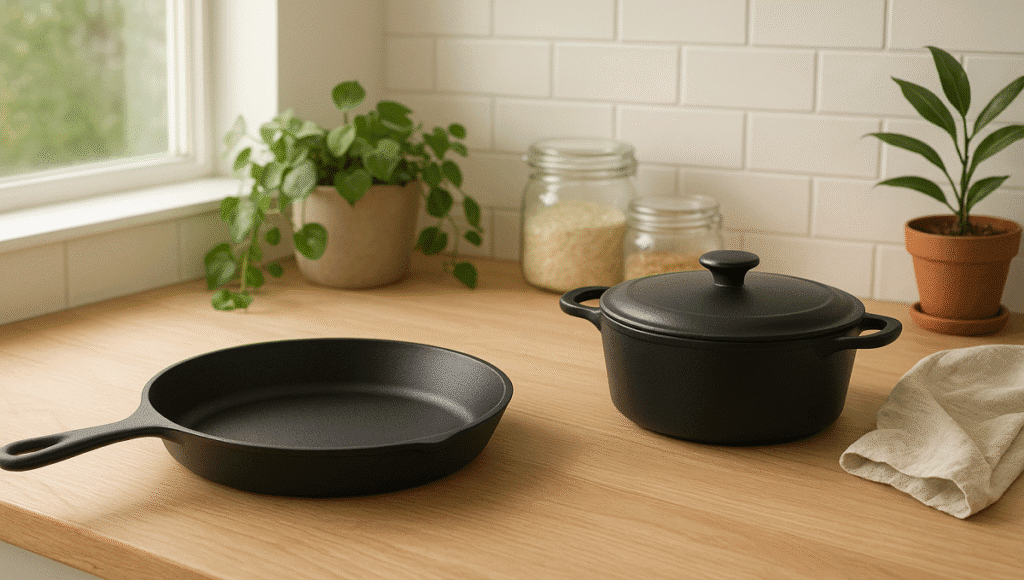
This is the most common type. It is a round pan with handles.
You can cook:
- Eggs
- Chicken
- Fish
- Vegetables
- Bread
- Cake
A cast iron skillet is very useful for many meals.
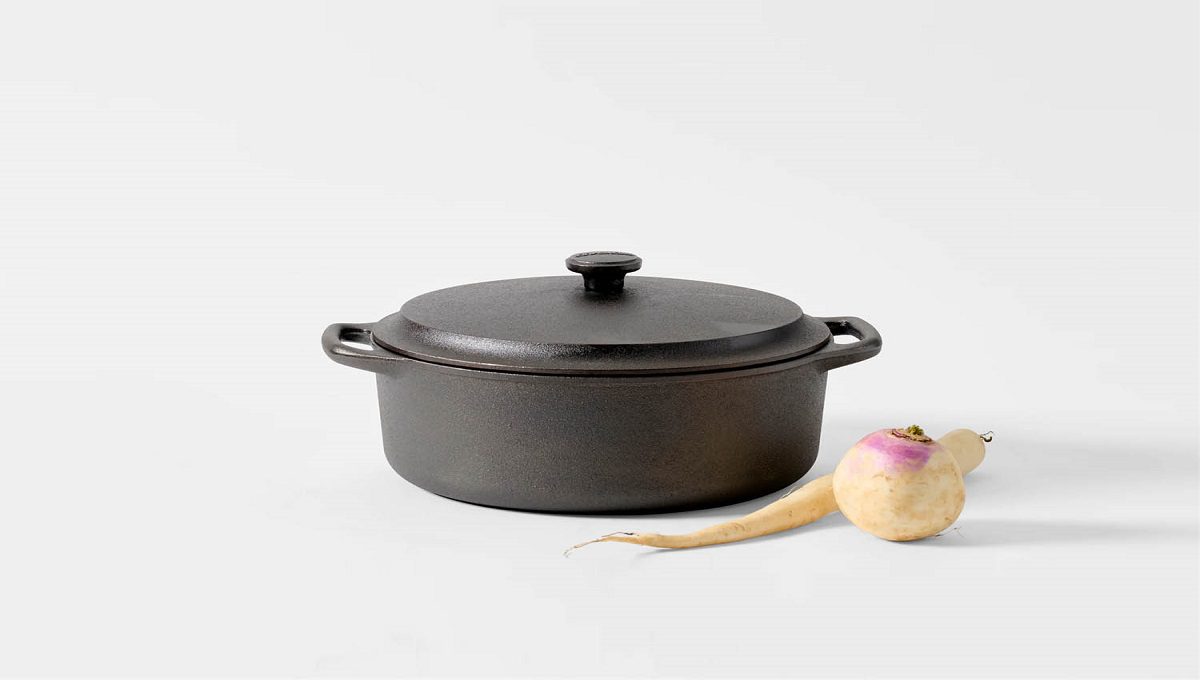
2. Cast Iron Dutch Oven
This is a deep pot with a lid. It is good for slow cooking.
You can cook:
- Soups
- Curry
- Stews
- Rice
- Pasta
- Bread
It keeps heat inside and cooks food soft and tasty.
3. Grill Pan
A cast iron grill pan has lines like a BBQ grill.
You can grill:
- Meat
- Sausages
- Vegetables
- Sandwiches
It makes grill marks and gives a smoky taste.
4. Griddle Pan
Flat and wide. Good for breakfast foods.
You can cook:
- Pancakes
- Roti
- Paratha
- Toast
5. Cast Iron Wok
Bowled shape. Good for fast cooking.
You can cook:
- Stir fry
- Fried rice
- Noodles
Why You Should Use Cast Iron Pots and Pans
1. Very Strong and Long-Lasting
Cast iron can last many years. Some families use the same pan for 50 years or more. It does not break easily.
2. Natural Non-Stick Surface
When you season the pan, it forms a natural non-stick layer. You do not need harmful chemicals like Teflon.
3. Better Taste
Food cooked in cast iron has a deeper, richer flavor. Many chefs prefer it for this reason.
4. Works on Any Heat Source
Gas stove, induction, oven, broiler, campfire — cast iron works everywhere.
5. Good for Health
A small amount of iron from the pan mixes with the food, which can help people with low iron.
Pose
You may think cast iron is hard to use. But this is not true. With a few easy steps, you can cook like a pro. Let’s look at how to choose the best cast iron pot or pan for your home.
How to Choose the Right Cast Iron Pot or Pan
1. Check the Weight
Cast iron is heavy. Choose a size you can lift safely.
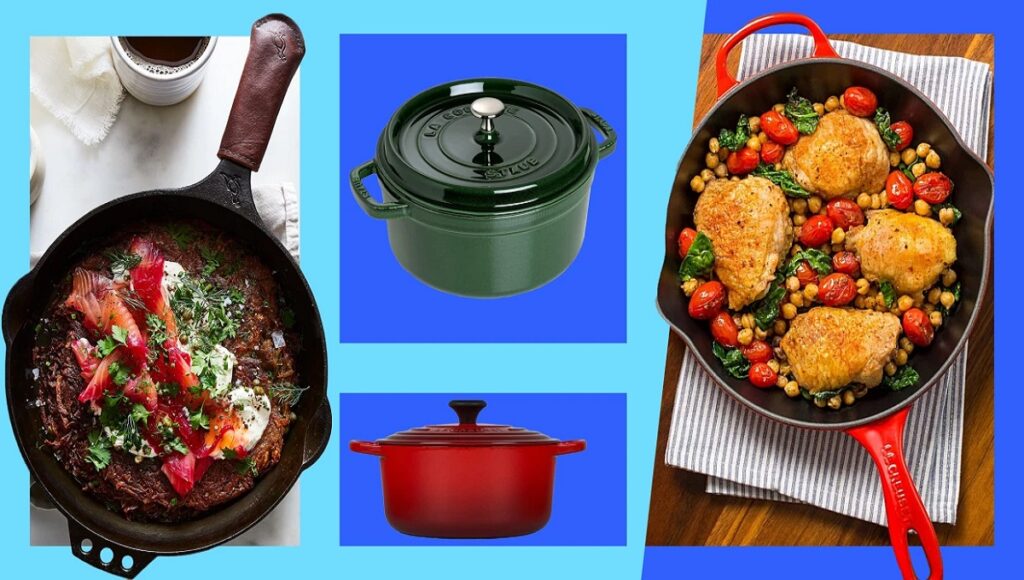
2. Choose Between Enameled or Traditional
Traditional Cast Iron
- Needs seasoning
- Very strong
- Natural non-stick
Enameled Cast Iron
- No seasoning needed
- Easy to clean
- Good for curry, tomato, lemon foods
Both are good. It depends on your comfort.
3. Choose Size
- Small pan (8 inch): for 1–2 people
- Medium pan (10–12 inch): for families
- Big Dutch oven (5–7 liters): for rice, biryani, stew
4. Choose a Trusted Brand
Good brands last longer and heat better. Some famous brands include Lodge, Le Creuset, Staub, Victoria, and many more.
COM
You want cookware that makes your cooking easy, safe, and fun. Cast iron does all of that. It makes simple food taste amazing. You will feel more confident in the kitchen.
How to Season Cast Iron Pots and Pans
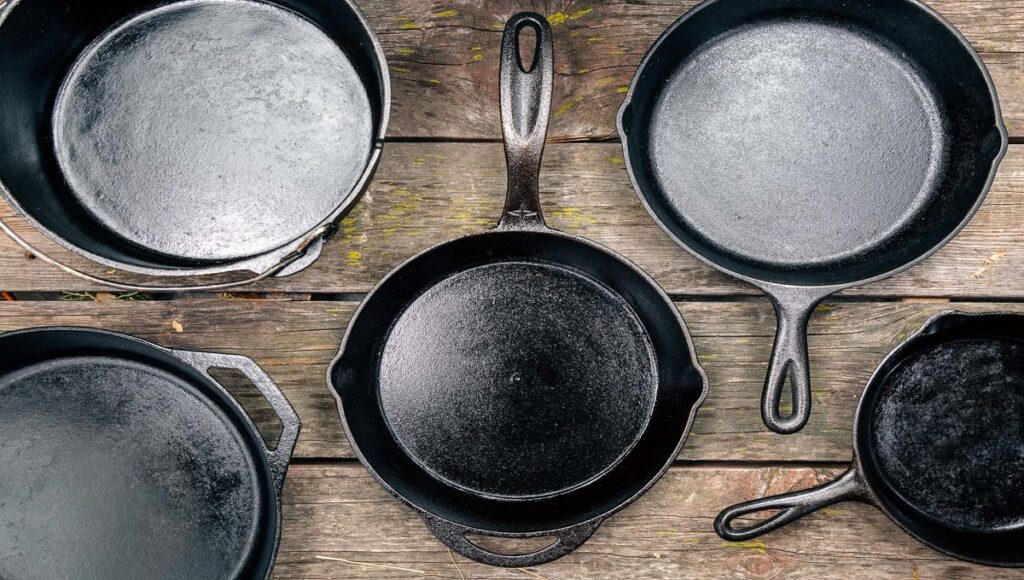
Seasoning is one of the most important steps in caring for cast iron. Seasoning makes your pan strong. It makes the surface smooth and non-stick. It protects your pan from rust. Many people feel scared of seasoning, but it is actually very simple.
Seasoning gives your pan a classic pose — dark, shiny, and ready to cook.
Why Seasoning Matters
When you season a pan, you heat oil on the surface. The oil bonds with the iron. It becomes a protective layer.
This layer helps in many ways:
- Food does not stick easily
- The pan becomes smoother
- The pan stays safe from water
- You use less oil
- The pan lasts longer
Seasoning is a natural process. There are no chemicals. Just iron and oil — simple, clean ingredients.
Step-by-Step Seasoning Guide
Follow this easy guide.
Step 1: Wash the Pan
Clean the pan using warm water and gentle soap. Dry it well with a cloth.
Step 2: Add Oil
Put a small amount of oil inside the pan. Use oils like:
- Vegetable oil
- Canola oil
- Flaxseed oil
Spread the oil everywhere — inside, outside, and the handle.
Step 3: Wipe the Oil
Wipe the oil again.
You should leave only a thin layer. If there is too much oil, the surface becomes sticky.
Step 4: Bake the Pan
Put the pan in the oven upside down.
Heat at high temperature for one hour. This helps the oil stick firmly to the iron.
Step 5: Cool It
Let it cool in the oven. Now your pan is seasoned and ready.
The entire process may look long, but once you do it, you understand it is simple. Many cooks enjoy this because it makes the pan feel personal — like a cooking partner.
Cleaning Cast Iron Pots and Pans
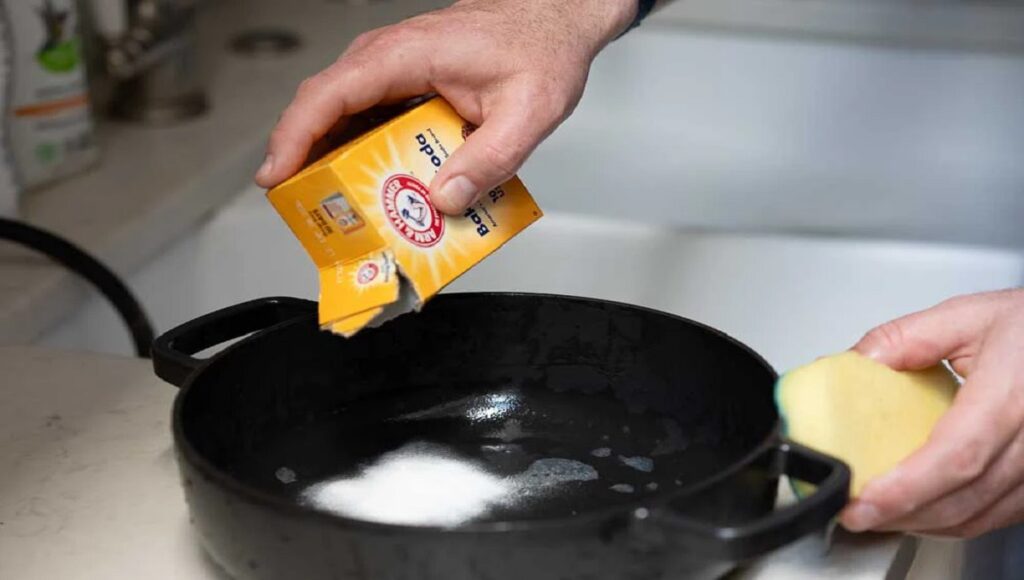
Cleaning cast iron is different from cleaning normal pans. But it is not hard. You just need the right method.
Here is how to clean cast iron properly.
1. Clean After Every Use
Do not leave food in the pan for long. After cooking, let the pan cool. Then wash it with warm water.
Many people think you cannot use soap. This is a common myth. You can use a little soap. Just avoid soaking the pan in water for many hours.
2. Use a Brush or Scraper
If food sticks, use a scrub brush or scraper. Avoid metal scrubbers. They can damage the seasoning.
For tough food, boil water in the pan for a few minutes. The food becomes soft and easy to clean.
3. Dry the Pan Right Away
Water is the enemy of cast iron. Dry the pan quickly. You can put it on low heat on the stove to remove all moisture.
4. Add a Thin Layer of Oil
After cleaning, rub a small amount of oil on the surface. This keeps the pan smooth. It also protects the seasoning.
This step takes only 10 seconds, but it protects your pan for many years. It is a small work with big value — a true com for your kitchen.
How to Remove Rust from Cast Iron
Rust can happen if your pan stays wet. But do not worry. Rust is not the end. You can fix it easily.
Step 1: Scrub the Rust
Use steel wool or a scrub pad. Remove all rust areas.
Step 2: Wash and Dry
Wash with warm water. Dry completely.
Step 3: Re-season the Pan
After removing rust, season the pan again. The surface will return to normal.
Rust is normal. It happens even to old, well-loved pans. The key is to clean and season again.
How to Store Cast Iron Pots and Pans
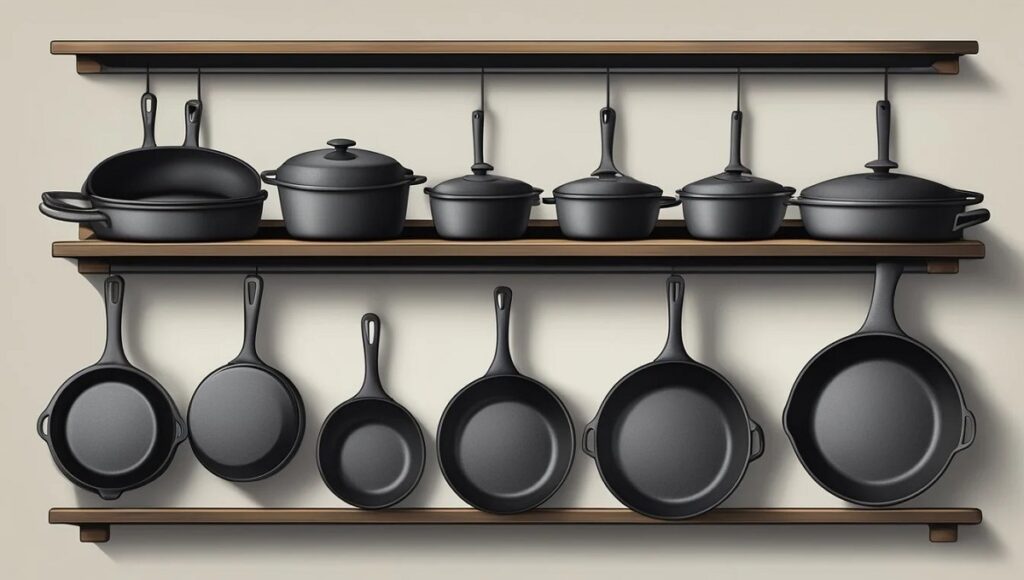
Storing your cast iron cookware correctly keeps it strong.
1. Keep It Dry
Always store your pan dry. Moisture causes rust.
2. Use Paper Towels
Place a paper towel inside the pan. This absorbs moisture.
3. Do Not Stack Wet Pans
If you stack pans, make sure each one is dry. A dry kitchen is the best environment for cast iron.
Best Ways to Use Cast Iron
Cast iron is very flexible. You can cook many kinds of dishes. Here are some of the best uses.
1. Searing Meat
Cast iron becomes very hot. This makes it perfect for searing. You get a crispy outside and a juicy inside.
2. Baking Bread
Many bakers use Dutch ovens to bake bread. The heavy lid traps moisture. Your bread becomes soft inside and crispy outside.
3. Frying and Sautéing
A cast iron skillet is perfect for frying eggs, potatoes, chicken, or vegetables. The heat stays even. Food cooks beautifully.
4. Slow Cooking
Stews, soups, curries, and chili taste amazing when cooked slowly in cast iron. Flavors blend well. Your food becomes rich and deep.
5. Outdoor Cooking
Cast iron works on campfires. It can handle high heat and open flames. Perfect for camping meals.
Cast Iron Safety Tips
Cast iron is safe. But you must use it correctly.
Here are simple safety steps to follow.
1. Handle Heat Carefully
Cast iron becomes very hot. The handle also becomes hot. Use a cloth, oven glove, or silicone grip. Never touch the hot handle with bare hands.
This protects you from burns. It also helps you move the pan safely.
2. Avoid Sudden Temperature Changes
Cast iron does not like sudden changes in heat. Never cool a hot pan with cold water. Do not place a hot pan on a cold surface.
This can cause thermal shock. The pan may crack. Keep temperature changes slow and gentle.
3. Cook with Enough Oil
Even a seasoned pan needs a little oil. This stops food from sticking. It also protects the surface.
Use oils like vegetable, canola, or sunflower. These oils blend well with cast iron’s natural seasoning.
4. Lift, Do Not Drag
Drag can scratch your stovetop. Lift the pan when you move it. Cast iron is heavy, so take your time.
5. Keep Children Safe
Cast iron stays hot for a long time. Keep kids away when the pan is cooling. Safety comes first.
Top Cast Iron Brands to Consider

There are many cast iron brands. Some are old and trusted. Some are modern and strong. Here are the top names to think about.
1. Lodge
Lodge is one of the most famous brands. It has been making cast iron for many years. Their pans are strong, affordable, and long-lasting.
Many home cooks start with Lodge. It gives great value for the price.
2. Le Creuset
Le Creuset makes enameled cast iron. These pans are beautiful. They come in many colors.
They do not need seasoning.
Le Creuset is premium. It costs more. But the quality is excellent.
3. Staub
Staub is another premium brand. Its cast iron is heavy and strong. The enamel coating is durable.
Many chefs love Staub Dutch ovens.
4. Victoria
Victoria pans are made in Colombia. They are lighter than many other cast iron pans.
They heat well. They are also affordable.
A great choice for new cooks.
Common Mistakes People Make with Cast Iron
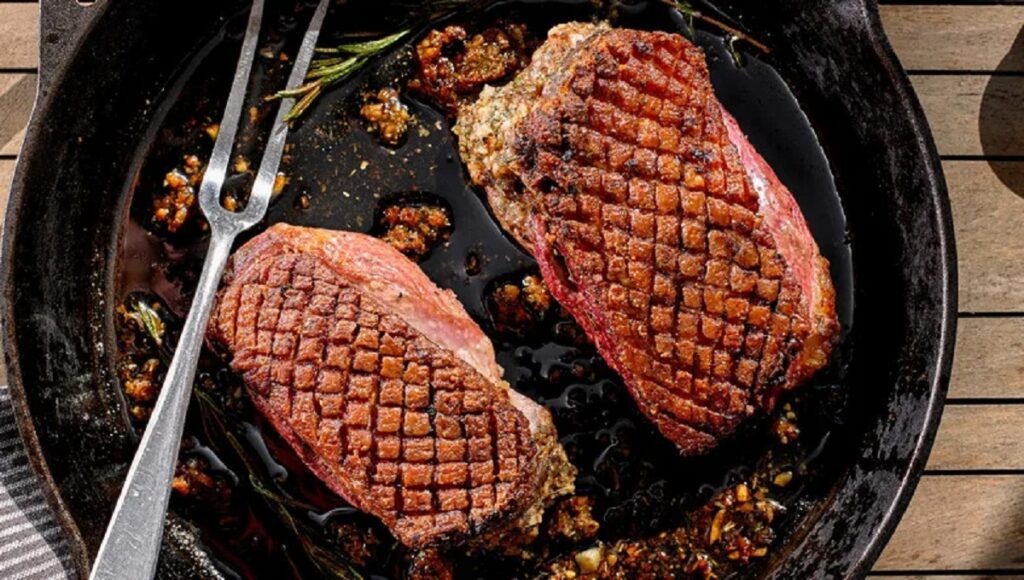
Cast iron is simple to use. But some mistakes can damage your pan. Here are the most common ones.
1. Using Too Much Soap
A little soap is fine. But too much can remove seasoning. Use a small amount only.
2. Soaking in Water
Water causes rust. Never leave cast iron soaking. Wash and dry quickly.
3. Not Drying Properly
If water stays on the surface, rust forms. Always dry the pan fully. Use heat if needed.
4. Using Wrong Oils for Seasoning
Some oils do not bond well. Avoid butter, olive oil, or coconut oil for seasoning. Use oils with high smoke points.
5. Storing in Damp Places
Moisture is bad for cast iron. Store your pan in a dry area. Use a paper towel inside the pan.
Why Many Cooks Prefer Cast Iron
Cast iron offers something special in the kitchen. It is not just a pan. It feels like a tool with character. Its strong build gives confidence.
When you cook with cast iron, your food gets a unique texture. Meat becomes crisp.
Bread becomes soft inside and crunchy outside. Vegetables become rich and flavorful.
Cast iron cooking gives your dishes a special pose — bold, rustic, and honest.
This is why many people say cast iron makes food taste better.
Cast Iron vs. Other Cookware
Let’s compare cast iron with other common cookware materials.
1. Cast Iron vs. Stainless Steel
Stainless steel is lighter. It heats faster. But it does not hold heat like cast iron. Food sticks more easily on steel.
Cast iron gives better browning. Better crust. Better heat control for slow cooking.
2. Cast Iron vs. Non-Stick Pans
Non-stick pans are easy to use. But they do not last long. The coating can scratch or peel.
Cast iron becomes naturally non-stick when seasoned. It is safer because it has no chemicals. It also lasts many years.
3. Cast Iron vs. Aluminum
Aluminum is very light. It heats fast. But it cools quickly. It is not good for high-heat cooking.
Cast iron is strong and stable. Better for frying, roasting, and baking.
Cooking Tips for Better Results
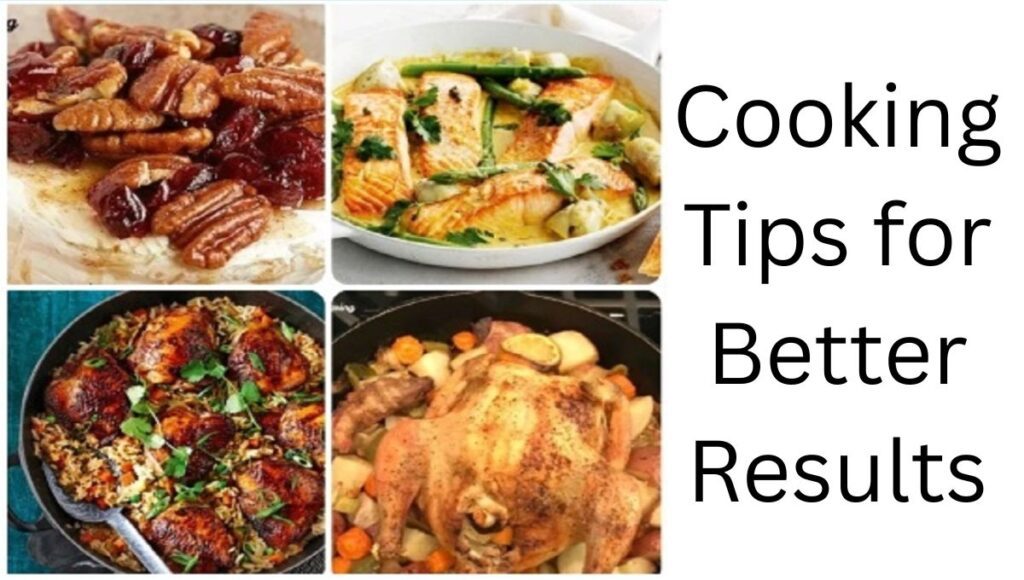
Here are simple tips for cooking better meals with cast iron.
1. Preheat Your Pan
Cast iron needs time to heat. Give it 3–5 minutes. The heat becomes even.
2. Do Not Move Food Too Early
Let food cook first. Do not flip meat too soon. It releases naturally when ready.
3. Use the Right Ingredients
Cast iron loves simple ingredients: oil, butter, meat, vegetables, eggs, bread dough. These cook beautifully in cast iron.
Delicious Foods You Can Cook in Cast Iron
Cast iron is one of the most flexible cookware types you can use. It works with many recipes. It handles many cooking styles. Here are some simple and tasty foods you can prepare.
1. Crispy Fried Chicken
Cast iron becomes very hot. This high heat is perfect for frying. Your chicken becomes crispy outside. Soft and juicy inside.
Add simple ingredients like salt, pepper, flour, and oil. The pan gives the chicken a beautiful golden pose.
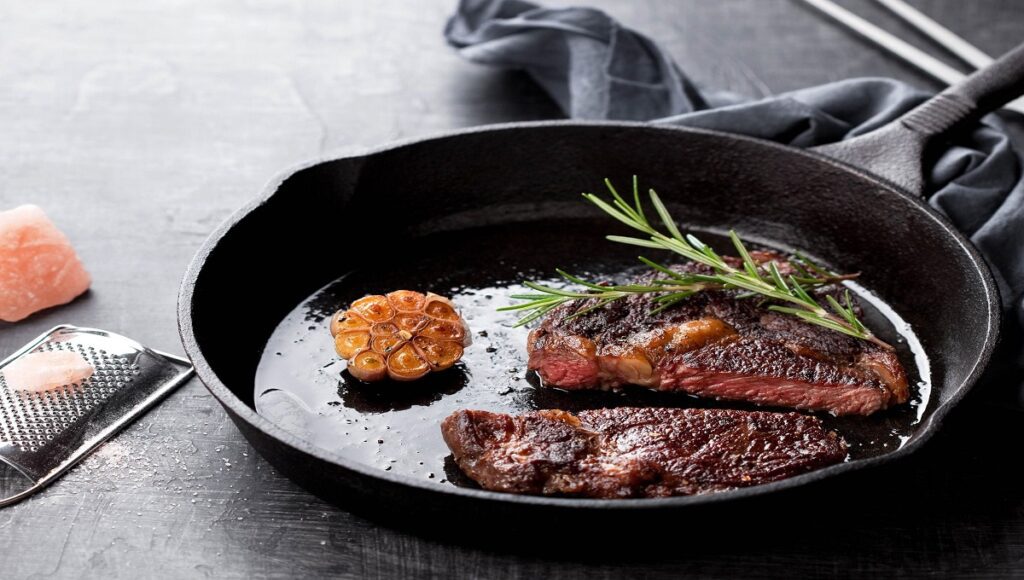
2. Perfect Steaks
If you want a steak with a deep brown crust, cast iron is the best choice. The heat stays even.
The meat cooks smoothly.
Add butter, garlic, and herbs. The flavor becomes rich and bold.
3. Baked Cornbread
Cornbread baked in cast iron becomes soft, warm, and slightly crunchy on the edges. Many people say cornbread tastes better only in cast iron. It absorbs heat from all sides.
4. Vegetables with Deep Flavor
Roast carrots, potatoes, or green beans. They become soft inside and crispy outside.
Cast iron brings out the natural sweetness.
This cooking method adds a fresh com to your kitchen routine.
5. One-Pan Meals
You can make full meals in one cast iron pan:
- Rice with vegetables
- Chicken and potatoes
- Stir-fry dishes
- Pasta bakes
One pan saves time.
One pan keeps flavor strong.
Outdoor Cooking With Cast Iron
Cast iron is perfect for outdoor cooking. It can handle open flames and very high heat. This makes it great for camping, picnics, or backyard cooking.
Cooking Over a Fire
You can place cast iron directly on the fire. It will not bend. It will not get damaged.
You can cook:
- beef
- fish
- vegetables
- eggs
- bread
The smoky taste adds a special outdoor pose to your food.
Using a Dutch Oven Outdoors
A cast iron Dutch oven is perfect for:
- soups
- chili
- slow-cooked meals
You can also bake bread or cakes inside it. The lid keeps all flavors inside.
Camping Breakfast
Make pancakes, sausages, eggs, or potatoes. Your meal becomes warm and comforting in cold weather.
Cast iron makes camping more fun. Simple meals become rich and special.
How to Restore Old Cast Iron
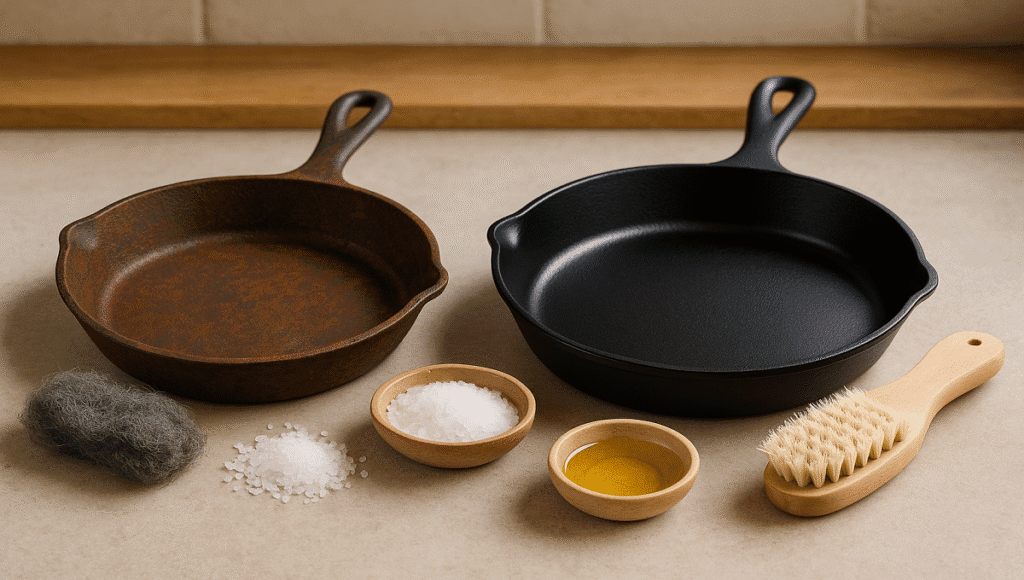
Many people find old cast iron pans at markets, garage sales, or inside old kitchens. They look rusty or dirty. But do not worry. Old cast iron can be restored easily.
Restoring a pan gives it a new life. It also gives your kitchen a story — a beautiful pose of past and present.
1. Remove Rust
Use steel wool or sandpaper. Scrub until the rust is gone. Do not worry if the pan looks scratched. Seasoning will fix that later.
2. Wash and Dry
Wash with warm water. Use mild soap if needed. Dry completely.
Remember: no water should stay on the surface.
3. Oil the Surface
Rub oil everywhere:
- inside
- outside
- handles
Use only a thin layer.
4. Bake and Season Again
Bake the pan in the oven. High heat bonds the oil to the pan. This creates a new protective layer.
Your old cast iron becomes strong again. It can last many more years.
Why Cast Iron Is Good for the Environment
Many people care about eco-friendly cookware. Cast iron is a great choice for the planet.
1. Cast Iron Lasts for Many Years
You do not need to buy again and again. This reduces waste. This reduces pollution from factories.
2. No Chemical Coatings
Non-stick pans use synthetic coatings. These can break down. They can harm the environment.
Cast iron uses natural oils for seasoning. No chemicals. No toxins.
3. Can Be Recycled Forever
Cast iron can be melted and made again. It does not lose strength. It is fully recyclable.
4. Works on All Cooktops
Cast iron works on gas, electric, induction, and fire. You do not need different pans for different stoves. This saves money and resources.
Frequently Asked Questions (FAQ)
Here are common questions about cast iron cookware.
1. Why is my food sticking?
Your pan may need better seasoning. Or the heat may be too low. Preheat the pan well.
Use a small amount of oil.
2. Can I use soap?
Yes. You can use a small amount of soap. Just dry the pan well afterward.
3. Can cast iron break?
It is strong. But if dropped on a hard floor, it can crack. Handle with care.
4. Can I cook acidic food?
Yes, but not for long. Tomato, vinegar, and lemon can remove seasoning. Use enameled cast iron for acidic dishes.
5. Can cast iron go in the oven?
Yes. Cast iron works in ovens, on stoves, and on grills. It is one of the most flexible cookware types.
Conclusion
Cast iron pots and pans are more than cookware. They are strong tools that can stay with you for life. They give your kitchen a brave and classic pose. They help you cook food with deep flavor and simple ingredients. They also support safe cooking because they do not use harmful chemicals.
Cast iron is good for frying, baking, roasting, and slow cooking. It works on all heat sources.
It becomes better with time. With simple care — cleaning, drying, and seasoning — your pan grows stronger. It becomes smoother. It becomes naturally non-stick. It becomes a trusted partner in your kitchen.
Many cooks believe cast iron adds a special com to every meal. A warm feeling. A rustic charm. A taste that feels honest and bold.
If you want cookware that lasts, cooks well, and grows with you, choose cast iron. It is a smart investment for any kitchen. Use it with care. Use it with joy.And let it help you make food that feels real, simple, and full of heart.