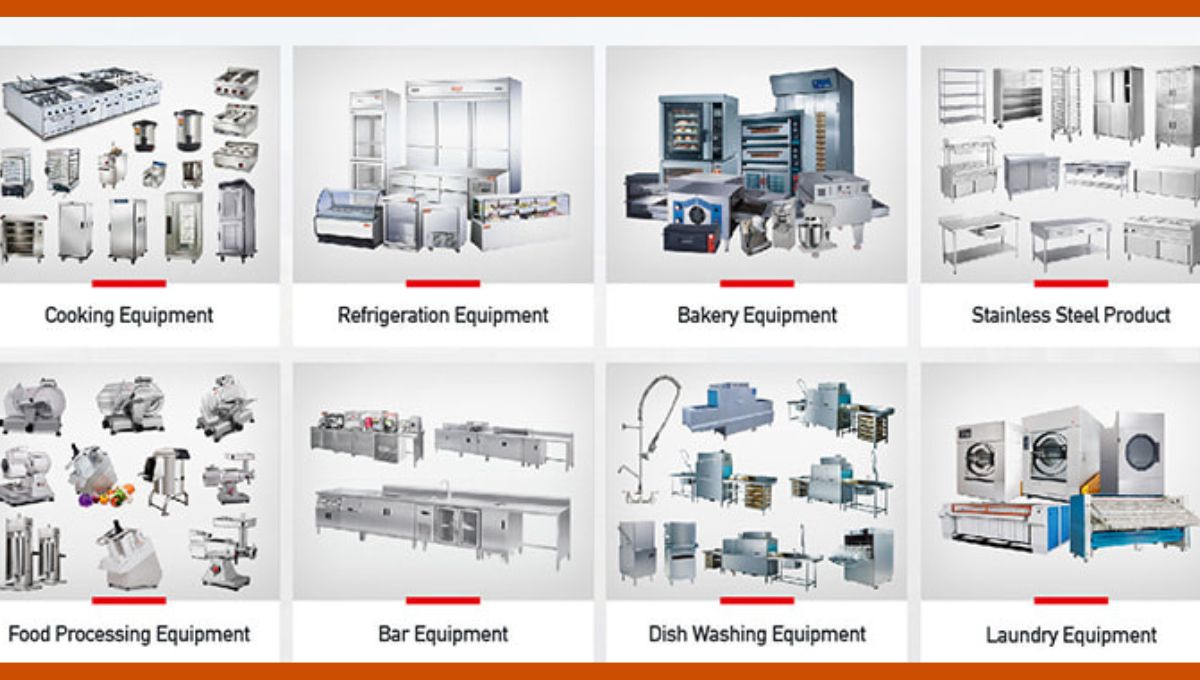
Running a restaurant kitchen is not easy. You need the right tools to cook fast, safe, and clean. This is why a commercial cooking equipment list is very important. It helps you understand what equipment you need before you open your kitchen. The right tools boost efficiency, improve taste, and keep guests satisfied.
Many new restaurant owners make mistakes because they do not know which equipment to buy. Some buy cheap tools that break quickly. Some buy the wrong size machines. Some forget about safety and cleaning. This guide will help you make good choices.
Why Commercial Cooking Equipment Is Important
Bold Idea: A commercial kitchen is not like a home kitchen.
In a home kitchen, you cook slowly. In a restaurant kitchen, you cook for many customers at one time. You need speed, safety, and power.
Commercial equipment is made of strong stainless steel, which is hygienic and long-lasting. It can handle heat, pressure, and constant use.
Benefits of Good Commercial Kitchen Equipment
- Fast cooking = quicker service
- Safe materials = clean food
- Less breakage = save money
- Easy cleaning = good hygiene
- Better workflow = happier staff
Good equipment supports your business growth.
Pose (Situation)
Imagine your chef is cooking for 30 customers at lunch hour. You have old pans, a small stove, and no food prep machines. The chef becomes slow. Customers wait too long. People get upset. You may lose business.
Think of a kitchen with a sturdy stove, wide griddle, deep fryer, prep tables, and a food processor. The chef works faster. Food comes fresh and hot. Customers are happy. They come back again.
Good equipment = Good business.
Com (Comfort / Solution Promise)
The key is to create a full commercial kitchen equipment list first. Only then start purchasing. This list helps you:
- Buy the right tools
- Save money
- Avoid mistakes
- Plan your kitchen layout
- Cook faster
This guide will show you each equipment category and explain why you need it.
Ingredients (What We Will Cover)
In this guide, we will explore:
- Cooking equipment
- Food preparation tools
- Refrigeration and storage
- Dishwashing and sanitation
- Safety and ventilation
We will also explain:
- What to buy
- Why it matters
- Tips for using it well
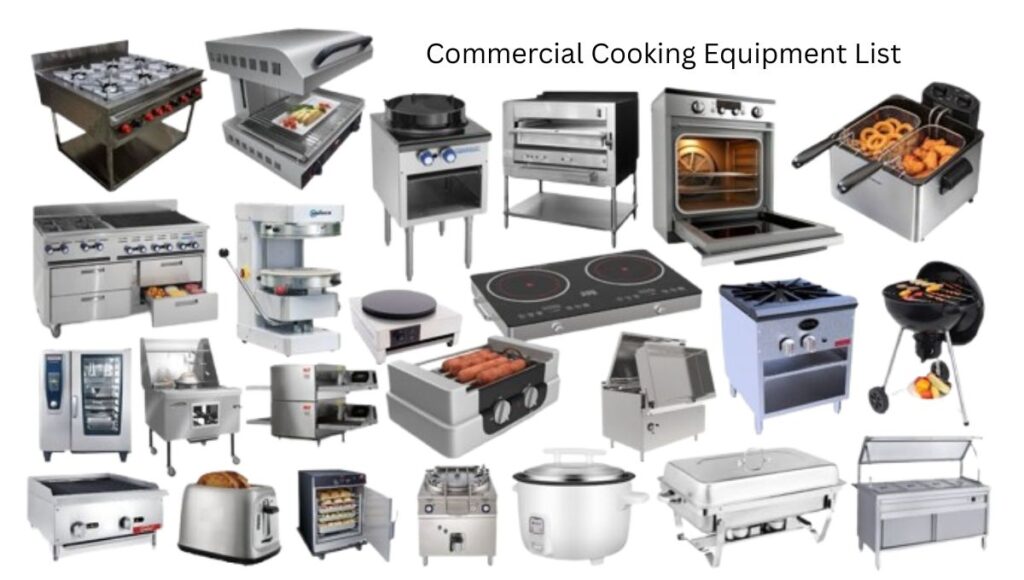
⏩ Cooking Equipment (Essential Items)
Cooking equipment is the heart of your kitchen. Without strong cooking tools, your whole kitchen slows down.
Commercial Range Stove
A commercial range is used for boiling, frying, simmering, sautéing, and heating. You can choose gas or electric.
- Gas Range: Fast heat, more control.
- Electric Range: Easy cleaning, steady temperature.
Choose the stove size based on your menu and kitchen space.
Commercial Oven
There are different types of ovens for different foods.
| Oven Type | Best For | Key Benefit |
|---|---|---|
| Convection Oven | Baking and roasting | Even heat distribution |
| Deck Oven | Bread and pizzas | High heat baking |
| Combi Oven | Steaming + baking + roasting | Very flexible, saves space |
A combi oven is expensive, but it can replace several machines.
Flat Top Griddle / Grill
This tool is good for:
- Burgers
- Eggs
- Kebabs
- Sandwiches
It gives a large cooking surface and cooks many items at once.
Deep Fryer
If your restaurant sells fries, chicken, fish, nuggets, or snacks, you need a deep fryer.
Choose a fryer with:
- Temperature control
- Oil filter system
- Strong safety features
This improves flavor and reduces waste.
Charbroiler
A charbroiler gives grill marks and a smoky taste. Great for:
- Steaks
- Burgers
- Grilled vegetables
This increases flavor and visual appeal.
⏩ Food Preparation Equipment
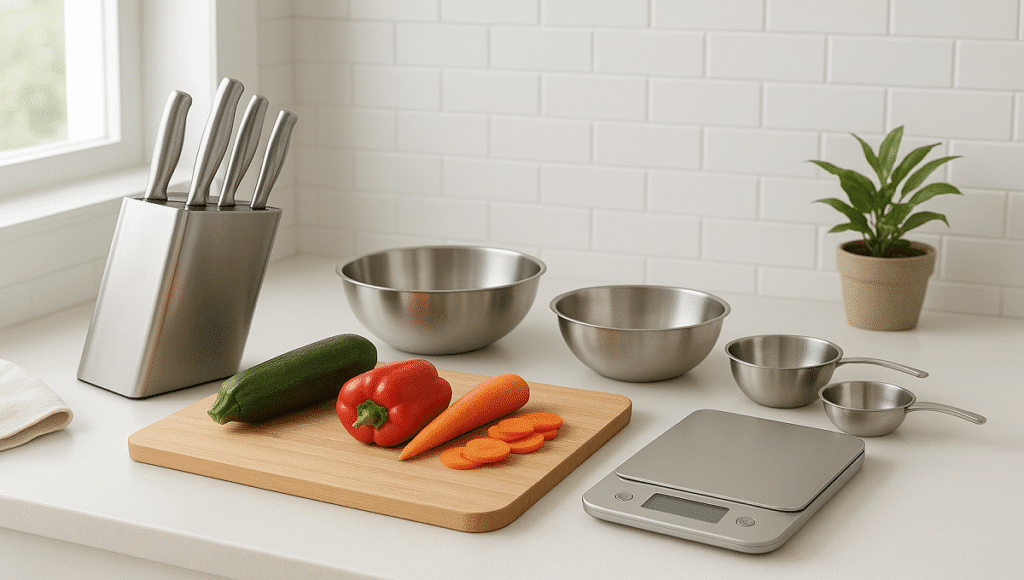
Food preparation takes time. Cutting, mixing, chopping, grinding, kneading, and slicing can be slow if done by hand. In a busy restaurant kitchen, speed is everything. So, food prep equipment helps your staff work faster and safer.
These tools reduce stress and improve consistency. When your food looks the same every time, customers trust your quality.
Pose (Situation)
Your restaurant is full. Orders are coming fast. The chef must prepare vegetables, sauces, and dough. If everything is done by hand, the chef gets tired. Mistakes happen. Food becomes slow.
Customers wait. Some become unhappy.
This situation is common when kitchens do not have good preparation equipment.
Com (Comfort / Solution Promise)
Using commercial food preparation equipment makes work easier. Staff stay relaxed. Food stays fresh. Service becomes faster.
You do not need many workers doing manual tasks. Machines help them.
This saves time, money, and energy.
Ingredients (Main Tools)
Here are the most useful food preparation machines:
Food Processor
A food processor is one of the most important tools. It can:
- Chop vegetables
- Blend sauces
- Grind nuts
- Make purees
- Mix ingredients fast
It saves a lot of time. Every restaurant should have one.
Tip: Choose stainless steel blades. They last long and stay sharp.
Commercial Mixer
For bread, pizza, cakes, or pastries, a powerful commercial mixer is essential. It handles all dough effortlessly.
There are two types:
- Planetary Mixer – Good for cakes, batter, sauces
- Spiral Mixer – Good for dough for pizza, bread, naan, buns
A commercial mixer works for hours without overheating. This is important in busy kitchens.
Meat Slicer
A meat slicer cuts meat in thin, clean slices. It is used in:
- Hotels
- Sandwich shops
- Steakhouses
- Deli restaurants
It makes meat look neat and professional. It also keeps portion size equal, which saves money.
Vegetable Cutter / Chopper
If your restaurant processes fresh vegetables daily, a veggie cutter is a must. It speeds up prep work significantly. It cuts:
- Carrots
- Potatoes
- Onions
- Cabbage
- Tomatoes
No tears from onions. No tired hands. Fast and clean cuts.
Blender
A commercial blender is stronger than a home blender. It can make:
- Smoothies
- Soups
- Curry pastes
- Dressings
Choose a blender with a heavy motor so it does not burn out.
Cutting Boards and Knives
Even with machines, you still need good knives and color-coded cutting boards.
Color-coding helps prevent contamination:
| Color | Use |
|---|---|
| Red | Raw meat |
| Blue | Raw fish |
| Green | Vegetables |
| Yellow | Poultry |
| White | Bread or bakery |
| Brown | Cooked meat |
This system is required in many countries to keep food safe.
⏩ Heating, Holding & Serving Equipment
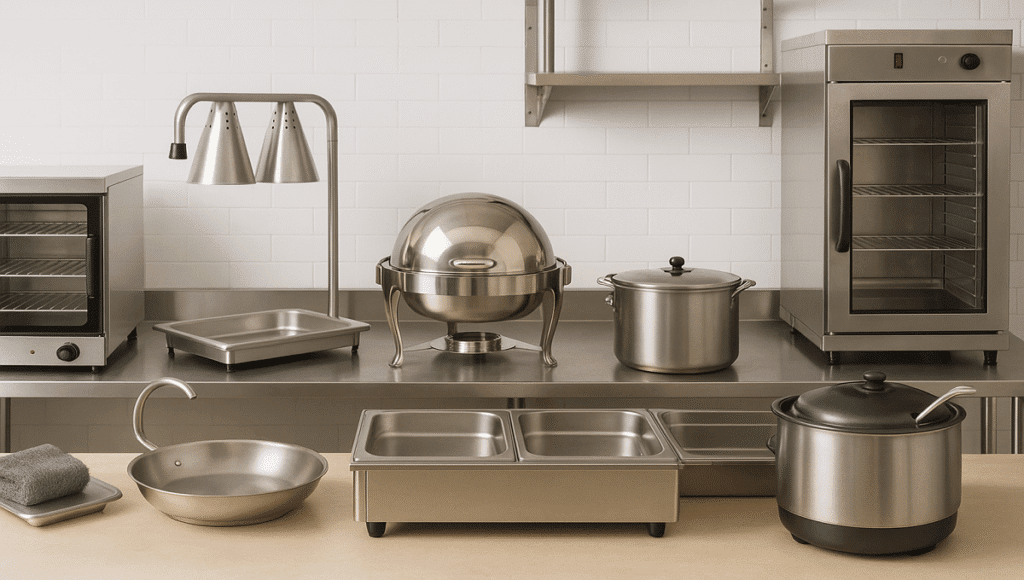
This type of equipment does not cook food. It keeps food warm and ready to serve. In busy service hours, this is very important.
If food becomes cold, customers complain. If food dries out, taste gets worse. Heating equipment solves this problem.
Pose (Situation)
Lunch time rush. Kitchen is full. Many orders ready. But if food waits too long, it becomes cold. The chef tries to reheat it. This harms the flavor. Customers become unhappy.
Com (Comfort / Solution Promise)
Using food holding equipment keeps food at the correct temperature. It stays warm, fresh, and safe for serving.
No rush. No stress. No loss of taste.
Ingredients (Important Tools)
Bain Marie / Steam Table
Keeps curries, soups, gravies, rice, and sides warm. Used in:
- Buffet restaurants
- Hotels
- Cafeterias
It uses steam heat. Very gentle and safe.
Heat Lamp
Used to keep plated food warm while waiting to be served. Very helpful during busy rush.
Holding Cabinet
Stores cooked food at a safe warm temperature. Used in large restaurants and catering.
Why This Matters
Warm food tastes better. Temperature control is also important for food safety laws.
⏩ Refrigeration and Storage Equipment
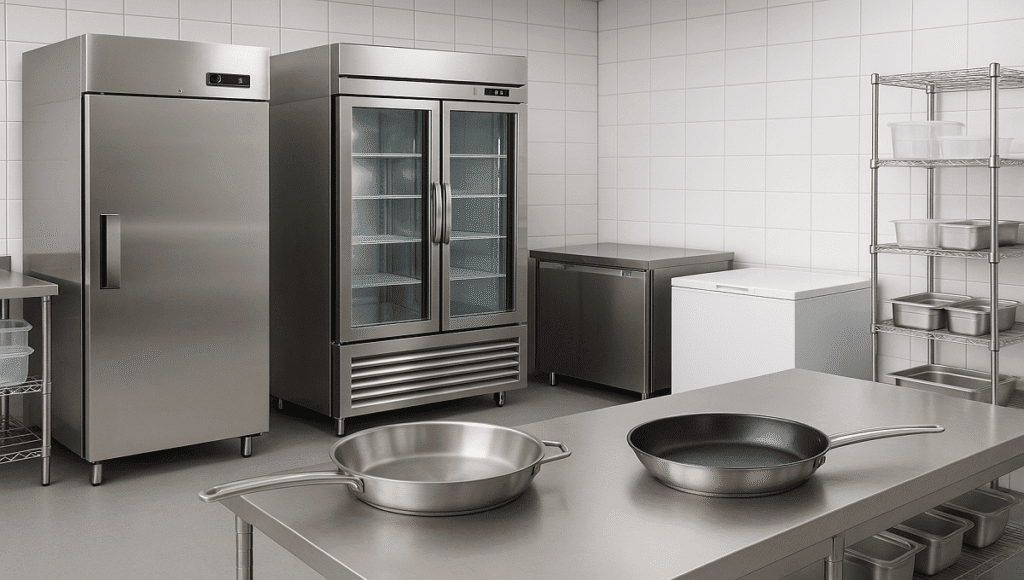
Keeping food fresh is very important in any restaurant. If food is not stored correctly, it can spoil fast. Spoiled food tastes bad and can make customers sick. Refrigeration is a crucial part of any commercial kitchen setup. It keeps ingredients fresh and safe.
Refrigeration keeps ingredients safe at the right temperature. It also helps maintain flavor, color, and texture.
Pose (Situation)
Imagine you buy fresh vegetables, meat, fish, cheese, and sauces in the morning. You place them on a normal shelf. After a few hours, the food becomes warm. Bacteria start growing. The food becomes unsafe.
If customers eat spoiled food, they may become very sick. This can cause serious trouble for your business.
Com (Comfort / Solution Promise)
The solution is to use commercial refrigeration equipment. These machines are stronger than home fridges. They keep food cold, even when the kitchen is hot or opened many times a day.
Commercial refrigerators are made to work nonstop.
Ingredients (Main Refrigeration Tools)
Walk-In Refrigerator
This is a large cold room. It is used in:
- Hotels
- Large restaurants
- Catering services
You can walk inside and store many items. Good for storing meat, vegetables, and dairy.
Walk-In Freezer
Used for long-term storage. Keeps food frozen. Helpful for meat, seafood, and bulk ingredients.
Reach-In Refrigerator
Looks like a tall fridge with doors. It is placed near the cooking area for quick access.
Good for daily use items like:
- Vegetables already cut
- Dairy
- Sauces
- Eggs
Prep Table Refrigerator
This is very useful in:
- Pizza restaurants
- Burger shops
- Sandwich cafes
It has cold storage below and a prep counter on top. Makes food preparation fast and organized.
Dry Storage Shelving
Not everything needs cold storage. Some ingredients stay good at room temperature.
Examples:
- Rice
- Flour
- Spices
- Cooking oils
- Sauces (sealed)
Use strong metal shelves. Ingredients must be stored off the floor to follow hygiene rules.
⏩ Dishwashing and Sanitation Equipment
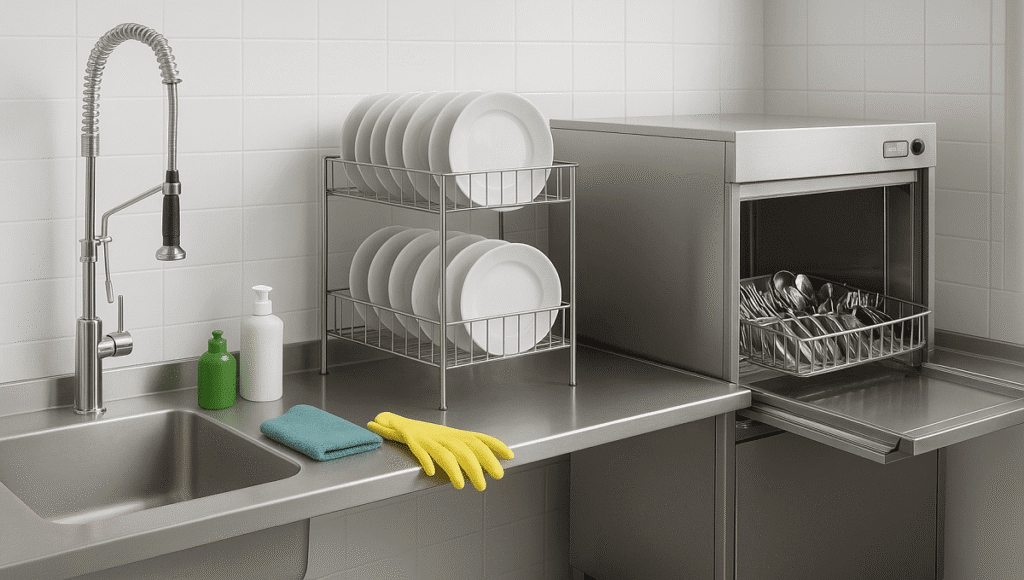
Cleanliness is just as important as cooking. A dirty kitchen can cause food poisoning, bad smell, and health violations. Your restaurant can even get shut down by inspectors.
Good sanitation keeps your customers safe and protects your reputation.
Pose (Situation)
You finish cooking. Plates and pans are dirty. If washing is slow, dishes pile up. The kitchen becomes messy. Bacteria grow. Staff feel stressed. Service slows down.
This happens in many restaurants where dishwashing is not planned well.
Com (Comfort / Solution Promise)
Using the right sanitation equipment keeps your kitchen clean and organized. It saves time, water, and effort. Staff stay calm and work faster.
Ingredients (Sanitation Tools)
Commercial Dishwasher
A commercial dishwasher washes plates quickly. It also sanitizes them with high heat.
Benefits:
- Faster than hand washing
- Removes grease well
- Very hygienic
There are two main types:
- Under-counter dishwasher (small restaurants)
- Conveyor dishwasher (large restaurants)
Three-Compartment Sink
This sink has three bowls:
- Wash
- Rinse
- Sanitize
It is required by many food safety laws.
⏩ Hand Washing Sink
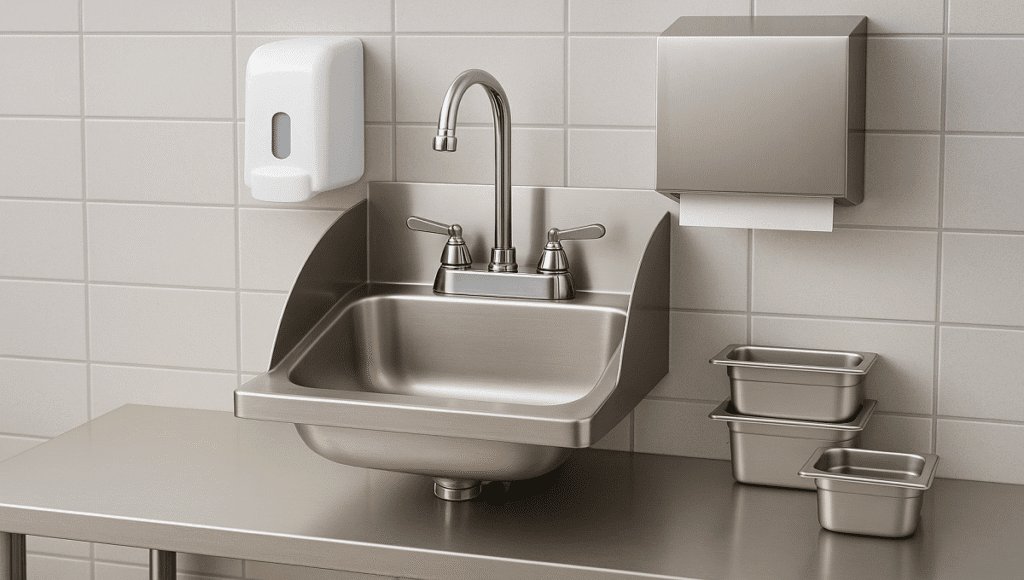
Staff must wash hands often. This prevents germs from spreading.
Every kitchen must have a separate hand washing sink.
Drying Racks
Used for drying dishes in open air. Air drying is cleaner than towel drying.
Cleaning Chemicals
Use food-safe cleaning products.
Do not use normal household bleach for everything. Each tool needs the right cleaning solution.
Example:
- Sanitizer for surfaces
- Grease cleaner for grills
- Dish soap for plates
Safety and Hygiene Tips
- Staff should wear aprons and kitchen gloves
- Always clean spills quickly to prevent slips
- Change cleaning cloths often
- Train staff on hygiene rules
⏩ Commercial Fryers

Pose:
A commercial fryer cooks foods in hot oil fast and evenly. It’s perfect for fries, chicken, fish, or donuts. It is very common in fast food places, cafes, hotels, and restaurant kitchens.
Com (Why it matters):
A good fryer keeps oil at the right heat. This gives crisp and even fried items. It also helps save oil and lowers daily cooking cost. Choosing the right size and type is important for your menu and customer volume.
Ingredients (Key points):
| Feature | Description |
|---|---|
| Capacity | Fryers come in small countertop size and large floor models. |
| Oil Type | Some use standard oil, some use filtered system to save oil. |
| Temperature Control | Must hold stable heat for even results. |
| Safety | Look for auto-shut and splash guards. |
Types of Commercial Fryers:
- Electric Fryer
Good for small kitchens. Easy to use. Works anywhere electricity is strong. - Gas Fryer
Heats faster. Good for high output restaurants. - Air Fryer (Commercial)
Uses very little oil. Health-focused kitchens use these.
Tips:
- Change oil on schedule.
- Clean filters daily.
- Do not overfill baskets.
⏩ Commercial Grills
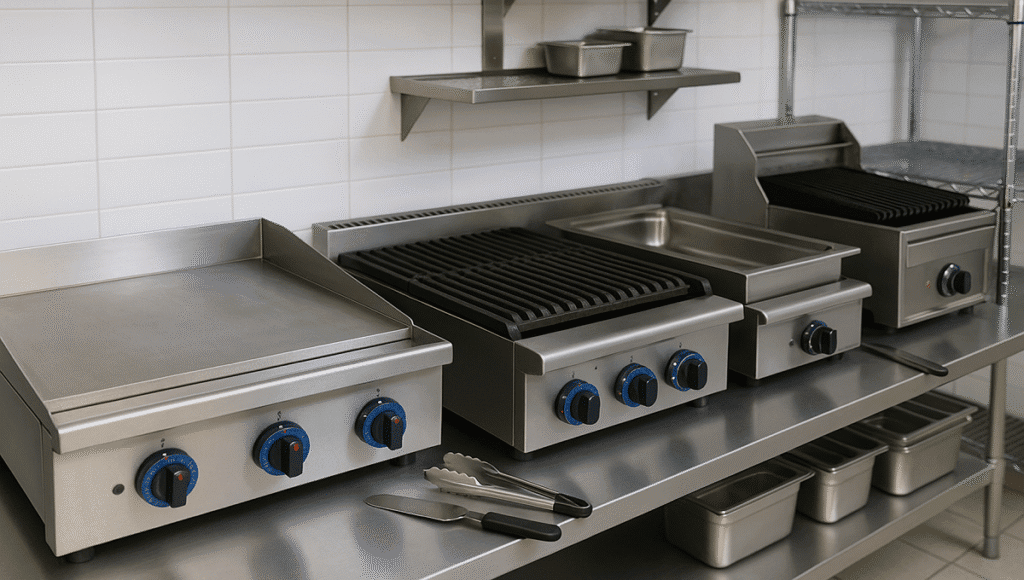
Pose:
Commercial grills are used to cook meats, vegetables, burgers, seafood, and sandwiches. They work with direct heat and create grill marks that improve taste and look.
Com:
A grill gives flavor that many customers love. It’s great for places that serve BBQ, grilled dishes, or sandwiches. Also ideal for busy breakfast spots.
Ingredients:
| Type | Best For | Notes |
|---|---|---|
| Charcoal Grill | BBQ taste | Needs ventilation. Strong smoky flavor. |
| Gas Grill | Fast service | Easy temperature control. |
| Electric Grill | Indoor kitchens | Good for small spaces. |
Maintenance Tips:
- Clean grills daily.
- Brush grates after every use.
- Keep grease pans empty.
⏩ Commercial Mixers
Pose:
A commercial mixer is used to mix dough, batter, sauces, and fillings. It is very common in bakeries, cafes, restaurants, and hotels.
Com:
Using a small home mixer in a restaurant kitchen is not good. It will break fast. So a strong commercial mixer is needed for heavy daily work.
Ingredients:
- Choose mixer size based on your dough batches.
- Bowl sizes range from 5 to 80 quarts.
- Look for variable speed control.
Types of Mixers:
| Mixer Type | Best Use |
|---|---|
| Planetary Mixer | Cake, cream, dough, sauces |
| Spiral Mixer | Bread dough, pizza dough |
| Hand Mixer (Commercial) | Small batches or final mix touches |
⏩ Commercial Food Processors
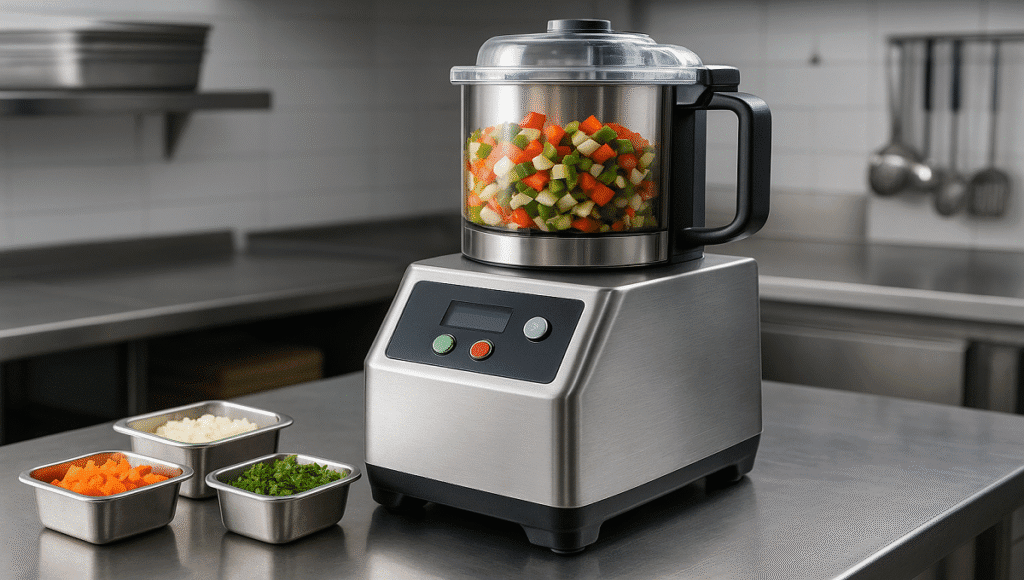
Pose:
Food processors help to chop, slice, blend, grate, and puree food quickly. They save a lot of time.
Com:
In busy kitchens, staff cannot chop everything by hand. That takes time. A food processor makes prep easy and fast.
Ingredients:
| Attachment | Use |
|---|---|
| Slicing Blade | Vegetable slicing |
| Shredding Disc | Grating cheese and cabbage |
| Chopping Blade | Making paste or sauces |
Tip:
Choose stainless steel blade for long life.
⏩ Commercial Blenders
Pose:
Blenders help mix drinks and food fast in cafes or restaurants. They’re perfect for smoothies, soups, and sauces.
Com:
A commercial blender has a stronger motor. It can blend hard ingredients like ice and frozen fruit easily.
Ingredients:
- Look for high watt motor.
- Choose sound shield to reduce noise.
- Pick strong stainless steel blades.
Maintenance:
Wash jar after each use. Do not run blender empty.
⏩ Commercial Freezers & Refrigerators
Pose:
These units keep ingredients fresh and safe. Food storage is the heart of any kitchen.
Com:
Without proper cooling equipment, food can spoil. This affects health and cost. A good freezer protects your business.
Ingredients:
| Type | Use |
|---|---|
| Reach-In Refrigerator | Easy access in kitchen |
| Walk-In Cooler | Large storage |
| Blast Freezer | Rapid cooling to protect food quality |
| Counter Refrigerator | Storage + worktop space |
Tips:
- Check temperature daily.
- Do not overload shelves.
- Clean coils every month.
⏩ Commercial Dishwashers
Pose:
Dishwashers clean dishes, glasses, and tools fast. They also sanitize everything for safe use.
Com:
Manual washing takes time and may not sanitize well. A commercial dishwasher ensures hygiene and speed.
Ingredients:
| Type | Best For |
|---|---|
| Under-Counter Dishwasher | Small cafes, small restaurants |
| Conveyor Dishwasher | Large kitchens with high plate volume |
| Glass Washer | Bars and juice shops |
Tips:
- Use proper dishwashing chemicals.
- Clean filters daily.
⏩ Commercial Food Warmers
Pose:
Food warmers keep cooked food warm for long hours without burning or drying it. They work well in restaurants, buffets, and catering setups. Also common in hotels and fast-food places.
Com (Why it matters):
If food cools down, it loses taste and becomes unsafe to serve. Warmers help maintain temperature and quality until food is ready to serve. This helps service stay fast and smooth.
Ingredients (Key Points):
| Feature | Benefit |
|---|---|
| Adjustable Temperature | Keeps food safe at 60°C or above. |
| Stainless Steel Body | Easy to clean and long-lasting. |
| Moisture Control | Prevents food from drying. |
Common Types of Food Warmers:
- Bain Marie / Steam Table
Uses hot water steam to keep food warm evenly. - Heat Lamp Warmers
Mostly used for fried items like chicken, fries, and snacks. - Hot Holding Cabinets
Used for bulk storage in catering and hotel kitchens.
Tips for Best Taste:
- Do not keep food in warmers for too long.
- Stir food occasionally to maintain texture.
- Check temperature regularly for safety.
⏩ Commercial Sinks & Washing Stations
Pose:
Sinks help wash veggies, dishes, and hands. They’re also used for cleaning and hygiene work. They are important for health and hygiene.
Com:
A clean kitchen builds trust. Government food safety rules require proper washing stations. So having the right number of sinks matters.
Ingredients:
| Sink Type | Use |
|---|---|
| 3-Compartment Sink | Wash, rinse, sanitize utensils. |
| Prep Sink | Wash fruits, meat, vegetables. |
| Hand Wash Sink | Separate for staff hand cleaning. |
Useful Tips:
- Do not mix hand-wash sink with utensil wash.
- Use food-safe sanitizing solutions.
- Keep washing area clean and dry.
⏩ Safety & Ventilation Equipment
Pose:
Safety tools and ventilation systems protect workers and keep kitchen air clean.
Com:
Commercial kitchens produce heat, smoke, and grease. Without proper ventilation, it becomes unsafe for staff and customers.
Ingredients:
| Equipment | Purpose |
|---|---|
| Range Hood | Removes smoke and grease. |
| Fire Suppression System | Auto extinguishes grease fires. |
| Fire Extinguishers | For emergency use. |
| First Aid Kit | For quick treatment. |
Safety Tips:
- Train staff on how to use fire safety tools.
- Keep hood filters clean.
- Do regular inspections.
⏩ Commercial Baking Ovens
Pose:
Baking ovens are used to make bread, cakes, pastries, pizzas, cookies, and roasted meals.
Com:
A standard home oven cannot handle heavy production. A commercial oven gives consistent heat and larger capacity.
Ingredients:
| Oven Type | Best For |
|---|---|
| Convection Oven | Cakes, pastries, cookies. |
| Deck Oven | Pizza, artisan bread. |
| Combination Oven (Combi Oven) | Steam + bake for more control. |
Tips:
- Preheat oven properly before use.
- Rotate trays for even baking.
- Clean crumbs daily to avoid burning.
⏩ Storage Racks & Shelving
Pose:
Storage racks keep kitchen tools, dry goods, and equipment organized.
Com:
A well-organized kitchen saves time. Staff can find tools faster and work cleaner.
Ingredients:
- Stainless steel shelves are best.
- Use labeled bins for ingredients.
- Keep racks raised off the floor to meet hygiene rules.
Arrangement Strategy:
- Put daily use items in front.
- Store heavy items on lower shelves.
- Keep chemicals away from food storage.
⏩ POS System (Point-Of-Sale System)
Pose:
A POS system is used to take orders, track payments, manage receipts, and manage sales.
Com:
In a busy restaurant, writing orders by hand leads to mistakes. A POS system improves speed and accuracy.
Ingredients:
| Feature | Benefit |
|---|---|
| Kitchen Display System (KDS) | Sends orders to kitchen screen. |
| Inventory Tracking | Helps avoid stock shortage. |
| Sales Reports | Helps in profit planning. |
Tip:
Choose a POS that supports your local language if staff language skills are basic.
⏩ Selecting the Right Commercial Cooking Equipment
Pose:
Choosing equipment is a big investment. The wrong choice leads to loss.
Com:
Think about your menu, kitchen space, and daily customer demand. Planning helps control cost and improves workflow.
Ingredients (Checklist Before Buying):
| Question | Why it Matters |
|---|---|
| What is my menu? | Equipment depends on food type. |
| How many customers daily? | Helps choose size and capacity. |
| What is my kitchen space? | Avoid overcrowding. |
| What is my budget? | Helps prioritize essentials first. |
Expert Tip:
Start with essentials, then add more equipment as business grows.
⏩ Maintenance Guide for Commercial Kitchen Equipment
Pose:
Every machine in your kitchen needs care. If you clean and maintain equipment daily, it will last longer and work better.
Com:
Restaurants lose money when equipment breaks. Repairs are expensive, and work stops. Good maintenance protects your investment and keeps the kitchen running smoothly.
Ingredients (Key Actions):
| Task | Frequency | Benefit |
|---|---|---|
| Wipe and clean surfaces | Daily | Removes grease and dirt |
| Check temperature settings | Daily | Ensures food cooks safely |
| Deep clean cooking equipment | Weekly | Prevents buildup and bacteria |
| Service machines by a technician | Every 3-6 months | Extends equipment life |
Simple Maintenance Tips
- Always turn off power before cleaning.
- Use food-safe cleaners to avoid contamination.
- Do not use too much water on electrical equipment.
- Train staff to clean as they work to avoid heavy buildup.
Example:
A refrigerator coil covered in dust uses more electricity and cools less effectively. A simple cleaning saves money.
⏩ Cleaning and Hygiene in Commercial Kitchens
Pose:
Clean kitchens protect customer health and follow food safety laws.
Com:
Unclean surfaces can spread bacteria and cause food poisoning. Bad hygiene can damage your restaurant’s reputation.
Ingredients (Cleaning Zones):
| Area | Cleaning Method |
|---|---|
| Cooking surfaces | Use degreaser + rinse |
| Cutting boards | Wash + sanitize after each use |
| Floors | Sweep + mop daily |
| Sinks | Scrub and disinfect often |
Food Safety Hygiene Rules
- Staff must wash hands before handling food.
- Use separate cutting boards for meat and vegetables.
- Store raw meat below cooked food to avoid mixing.
- Keep refrigerators at 2°C to 4°C to prevent bacteria growth.
Small Tips with Big Results
- Change kitchen towels often.
- Ensure proper drainage to prevent standing water.
- Keep trash bin covered at all times.
⏩ Energy Saving Tips
Pose:
Restaurants use a lot of electricity and gas. High energy bills reduce profit.
Com:
Small changes in kitchen operations can save huge costs every month.
Ingredients (Energy Saving Ideas):
| Practice | Result |
|---|---|
| Turn off equipment when not in use | Saves electricity |
| Keep freezer and refrigerator doors closed | Maintains temperature |
| Use LED lighting | Lower energy cost |
| Descale burners and heating elements | More efficient heat |
Smart Equipment Choices
- Look for energy-efficient or eco-friendly models when buying.
- Choose induction cookers when possible; they waste less heat.
- Use insulated hot holding cabinets to retain heat longer.
Note:
Energy savings are not only about cost. They also make the kitchen more comfortable for workers.
⏩ Cost-Saving Ideas When Buying Equipment
Pose:
Not all restaurants can buy all equipment at once. It is okay to start small.
Com:
Choosing the right tools first helps control budget and prevents overspending.
Ingredients (Ways to Save Money):
- Buy used commercial kitchen equipment from trusted suppliers.
- Start with core essentials (stoves, refrigerators, prep tables).
- Add specialty machines after business grows.
- Compare prices from multiple dealers before buying.
Example Strategy:
If you run a small café:
Start with:
- One combination oven
- Small prep fridge
- Coffee machine
Add later:
- Display warmer
- Extra refrigerators
- POS upgrade
This allows you to grow step-by-step, without financial stress.
⏩ How to Arrange Equipment in Your Kitchen
Pose:
The layout of your kitchen affects speed and safety.
Com:
A messy kitchen slows down staff and leads to mistakes. A well-organized kitchen improves workflow.
Ingredients (Kitchen Workflow Zones):
| Zone | What Happens There | Examples |
|---|---|---|
| Storage Zone | Keep ingredients | Fridge, pantry racks |
| Prep Zone | Cut, wash, mix food | Prep tables, sinks |
| Cooking Zone | Heat and cook | Stove, fryer, oven |
| Service Zone | Pack and plate food | Heat lamps, plating counter |
Layout Tips:
- Keep prep area close to sink for easy washing.
- Place stove and fryer together so heat stays in one zone.
- Keep walkways wide to prevent accidents.
- Store heavy equipment low to avoid lifting injuries.
⏩ Why This Commercial Cooking Equipment List Matters
Pose:
A commercial kitchen is a system. Every tool supports another.
Com:
Choosing the right equipment keeps food quality steady. It also speeds service and makes staff work easier.
Ingredients (Restaurant Success Factors):
- Good equipment increases food quality.
- Organized kitchen boosts speed and teamwork.
- Clean and safe environment builds customer trust.
- Smart purchasing reduces business risk.
Conclusion + Call To Action
This commercial kitchen list shows every key tool you need. It helps you understand what a pro kitchen requires. No matter if it’s a café, bakery, or restaurant, equipment matters most. The right tools can shape your success.
Take your time. Plan carefully. Start with what you need most.