Starting a restaurant is exciting. The kitchen is the heart of the business. To cook food fast and in a clean way, you need the right equipment for a restaurant kitchen. Good kitchen tools make work smoother, cut waste, and help you serve delicious meals.
When your kitchen is well-organized, your team can move fast. They don’t get confused. This helps in quick service. Customers become happy. Happy customers return again and again.
In this guide, we will look at the important equipment. We will also talk about how to choose, use, and take care of them. We will use simple words, clear tips, and useful examples.
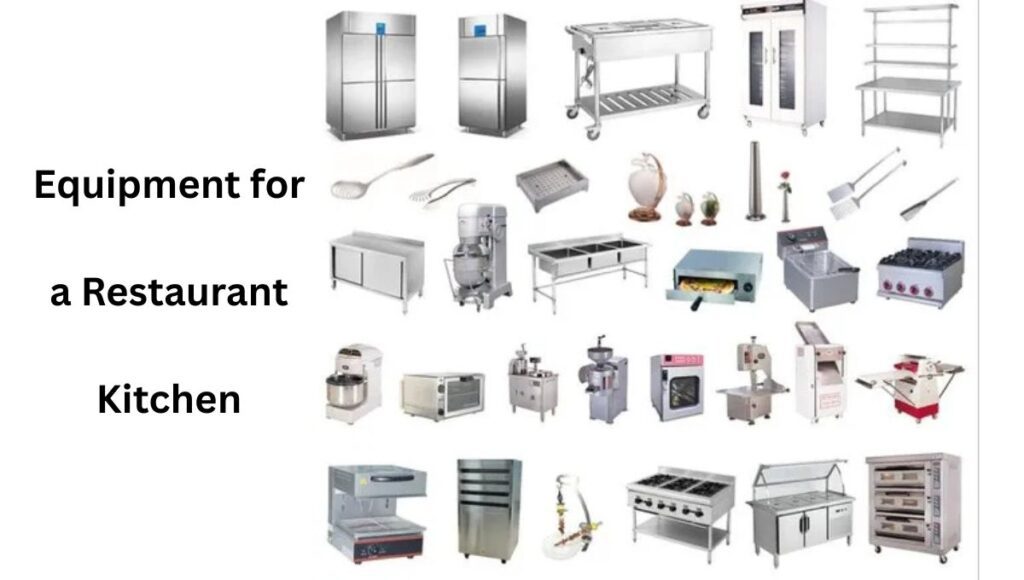
Why the Right Kitchen Equipment Matters
A kitchen with the correct equipment works like a smooth machine. Here is how it helps:
⏩ Better Food Quality
If you use high-quality stoves, ovens, and knives, you can cook food properly. This keeps taste and texture perfect.
⏩ Fast Service
Customers want food fast. Good kitchen tools help staff cook and serve quickly.
⏩ Clean and Safe Cooking
Correct sanitation equipment, gloves, and storage keep food clean. Clean food = Safe customers.
⏩ Less Waste
Right storage helps save food. Right tools prevent mistakes.
POSE (Problem – Outcome – Solution – Example)
Problem: Many new restaurants buy too much equipment or the wrong types. This causes stress and wasted money.
Outcome: Kitchen becomes crowded, slow, and unsafe.
Solution: Learn about each equipment item before buying. Choose only what fits your menu and kitchen space.
Example: A small bakery does not need a large pizza oven. A small convection oven is enough.
COM (Clear, Organized, Meaningful)
Clear: Understand what each tool does.
Organized: Place items where they are used.
Meaningful: Buy equipment that supports your menu.
Main Categories of Restaurant Kitchen Equipment
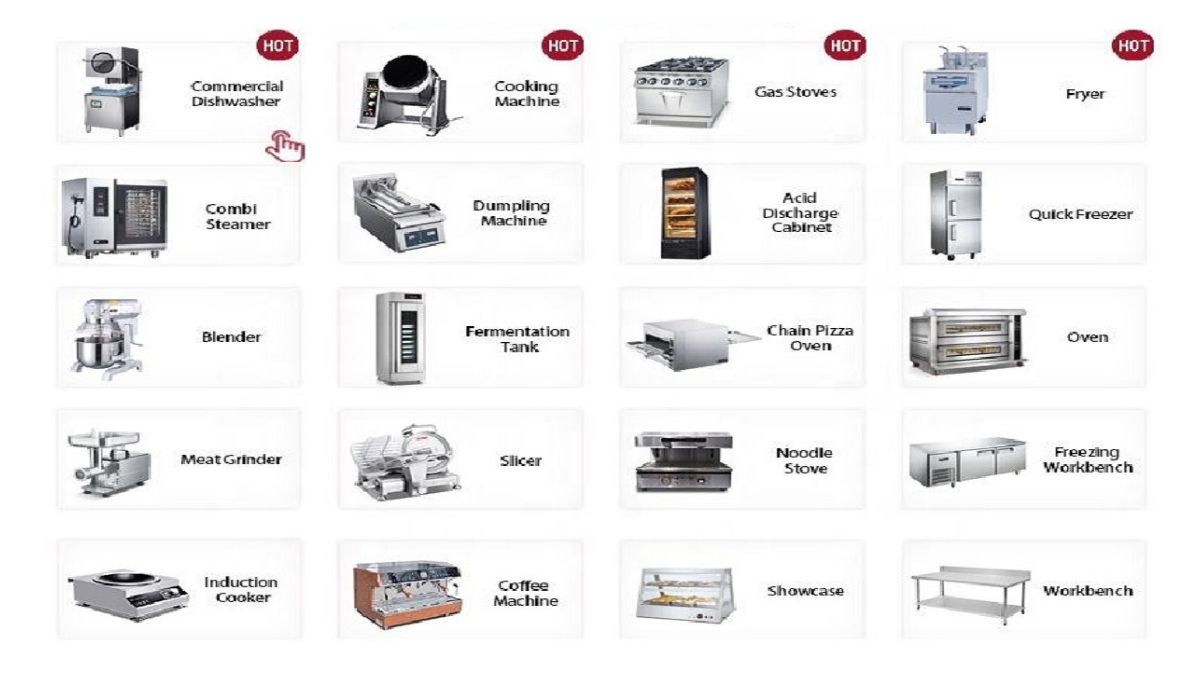
You can group equipment for a restaurant kitchen into 5 main areas:
| Category | Examples | Purpose |
|---|---|---|
| Cooking Equipment | Stove, Oven, Fryer, Grill | Cooking the food |
| Food Prep Equipment | Knives, Cutting board, Mixers | Prepare ingredients |
| Refrigeration Equipment | Freezers, Walk-in coolers | Keep food cold |
| Storage Equipment | Shelves, Bins, Racks | Keep kitchen organized |
| Cleaning & Safety | Dishwasher, Gloves, Sanitizer | Keep kitchen safe |
Ingredients of a Well-Organized Kitchen
Think of your kitchen like a recipe. It needs:
- Heat (stove, oven)
- Cold (fridge)
- Cutting (knives, boards)
- Space (shelves, tables)
- Clean tools (dishwasher, sanitizer)
When these are balanced, the kitchen works smoothly.
Essential Cooking Equipment
Cooking equipment is the core of the kitchen. These are the tools that cook the food.
⮞ Commercial Range Stove
This is the main cooking machine. You can boil, fry, sauté, and simmer food here.
Why it matters:
Very flexible. Works for almost every dish.
Tip:
Choose strong steel material. Easy to clean.
⮞ Commercial Oven
Used for baking, roasting, heating, and slow cooking.
Types:
- Convection oven (fast hot air cooking)
- Standard oven (basic heating)
⮞ Deep Fryer
For fries, fried chicken, samosas, nuggets.
Safety Tip:
Always use oil filter tools. Oil can be reused safely.
⮞ Grill or Griddle
Used for cooking meats, fish, eggs, sandwiches, burgers, and breakfast food.
Benefit:
Gives food nice flavor and marks.
POSE Example
- Problem: Food takes long to cook.
- Outcome: Customers get angry.
- Solution: Use a commercial grill and stove for faster cooking.
- Example: A grill can cook 10 patties at one time.
Food Preparation Equipment
Before cooking, ingredients need cutting, slicing, mixing, and shaping. These tools help make prep fast.
Chef Knives
A sharp knife makes cooking easier and safer.
Cutting Boards
Use different colors to avoid cross-contamination.
Example:
| Board Color | Use |
|---|---|
| Red | Raw meat |
| Blue | Seafood |
| Green | Vegetables |
Food Processor
Cuts and mixes food fast. Saves time and energy.
Example Use: Makes sauce, cuts vegetables, blends spices.
Refrigeration Equipment
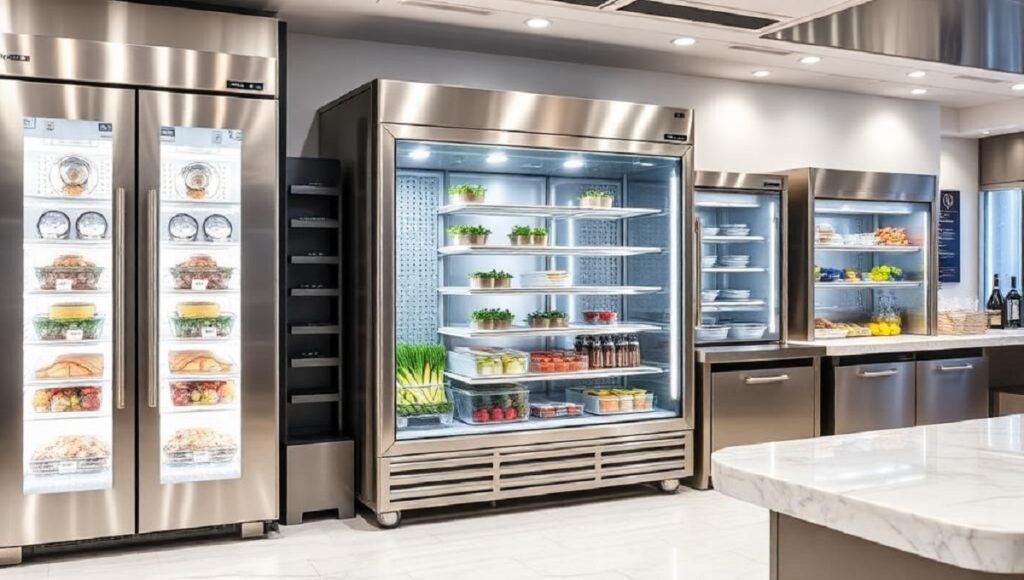
Refrigeration is very important in any restaurant kitchen. Food must stay fresh. Meat, dairy, vegetables, and sauces can spoil if they are not kept cold. So you need reliable refrigeration equipment for a restaurant kitchen.
There are different types of refrigeration units. Each has a purpose. Choosing the right one keeps your kitchen safe and smooth.
⏩ Reach-In Refrigerator
This is a tall fridge that you open like a normal home fridge. It is used for stored items you need often.
Benefits:
- Easy to access
- Good for daily use
- Saves time during cooking
Tip:
Place it close to the cooking area for fast access.
⏩ Walk-In Cooler
This is a large cold room. You can walk inside it. Restaurants use walk-in coolers for storing food in bigger amounts.
Use:
Best for large restaurants, hotels, catering services.
Pose Example:
- Problem: Buying fresh ingredients daily is hard.
- Outcome: Food stock runs out.
- Solution: Walk-in cooler stores a week’s supply safely.
- Example: A walk-in cooler holds sacks of vegetables, meat boxes, and sauce containers.
⏩ Freezer Units
Freezers keep food frozen for long time storage. You can find two types:
| Type | Description |
|---|---|
| Chest Freezer | Large box freezer with top lid |
| Upright Freezer | Works like a tall fridge but freezes items |
Tip:
Label everything to avoid confusion.
Ingredients for Safe Cold Storage
To maintain food safety, remember:
- Keep raw meat separate from cooked food.
- Use sealed containers.
- Check temperature daily.
- Follow FIFO rule: First In, First Out.
This means use old food first.
If you follow these steps, your food stays fresh, clean, and safe for customers.
Storage Equipment
A kitchen becomes messy fast if there is no proper storage. Storage equipment helps keep everything in place. When tools are easy to find, the cooking process becomes faster.
⮞ Stainless Steel Shelving
Stainless steel is strong and easy to clean. Shelves should be placed along walls or in storage rooms.
Why stainless steel is best:
- Does not rust
- Easy to wash
- Long lasting
⮞ Ingredient Bins
Ingredient bins hold flour, rice, grains, sugar, and spices. Many bins have wheels. This makes them easy to move.
Tip:
Choose bins with transparent lids. You can see what is inside.
⮞ Food Storage Containers
Containers come in plastic or metal. Use airtight lids. This stops air and insects from entering.
Labeling example:
- Date stored
- Name of item
- Expiry date
This helps prevent waste.
Work Tables and Prep Stations
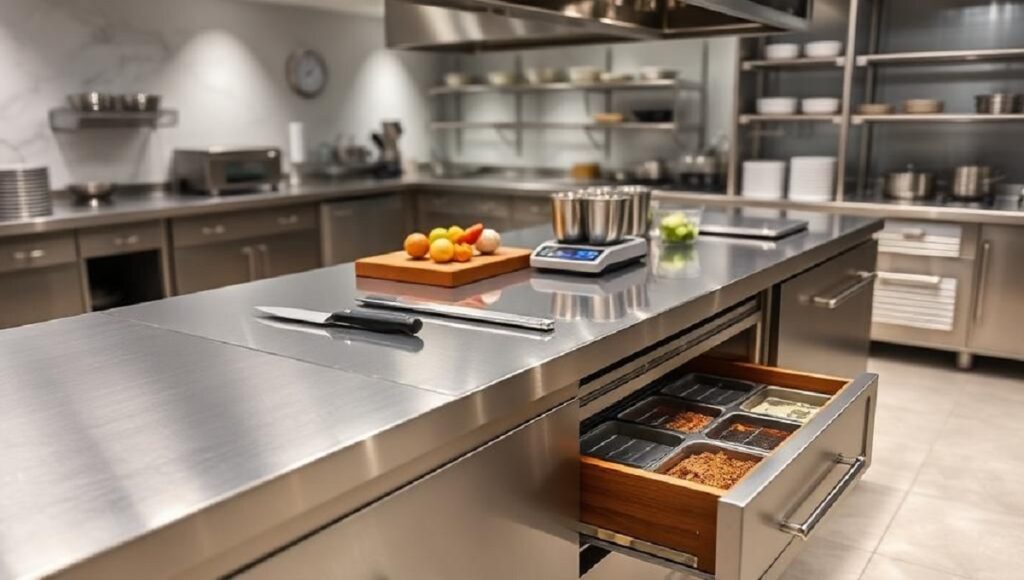
Work tables are used to cut, mix, and assemble food. Most restaurant kitchens use stainless steel work tables.
Why Stainless Steel Tables Are Good
- Strong surface
- Easy to sanitize
- Can handle heavy items
Some tables have shelves below. These provide extra space.
Pose:
- Problem: If the kitchen has no prep space, workers become slow.
- Outcome: Food service becomes delayed.
- Solution: Use large prep tables.
- Example: A pizza station table holds dough, sauce, cheese, toppings.
Dishwashing and Cleaning Equipment
Cleanliness is the most important part of the kitchen. Dirty kitchens can cause sickness and food poisoning. So cleaning tools must always be available and in use.
⏩ Commercial Dishwasher
Restaurants wash many dishes daily. Washing by hand can take long. A commercial dishwasher cleans fast and uses hot water.
Benefits:
- Saves time
- Removes bacteria
- Uses less water than hand washing
⏩ Three-Compartment Sink
This sink has 3 sections:
- Wash
- Rinse
- Sanitize
It ensures that every dish is cleaned properly.
Tip:
Always use food-safe sanitizing liquid.
⏩ Cleaning Tools
You need:
- Gloves
- Scrub brushes
- Sanitizer spray
- Mops
- Buckets
Safety Equipment
Safety should always be taken seriously in a restaurant kitchen. Burns, cuts, and fire accidents can happen. Good safety equipment reduces risk.
Fire Safety
- Fire extinguisher
- Fire suppression hood above stove
Personal Safety
- Heat resistant gloves
- Non-slip shoes
Food Safety
- Thermometers for checking food temperature
- Hairnets and gloves
How to Choose the Right Equipment for a Restaurant Kitchen
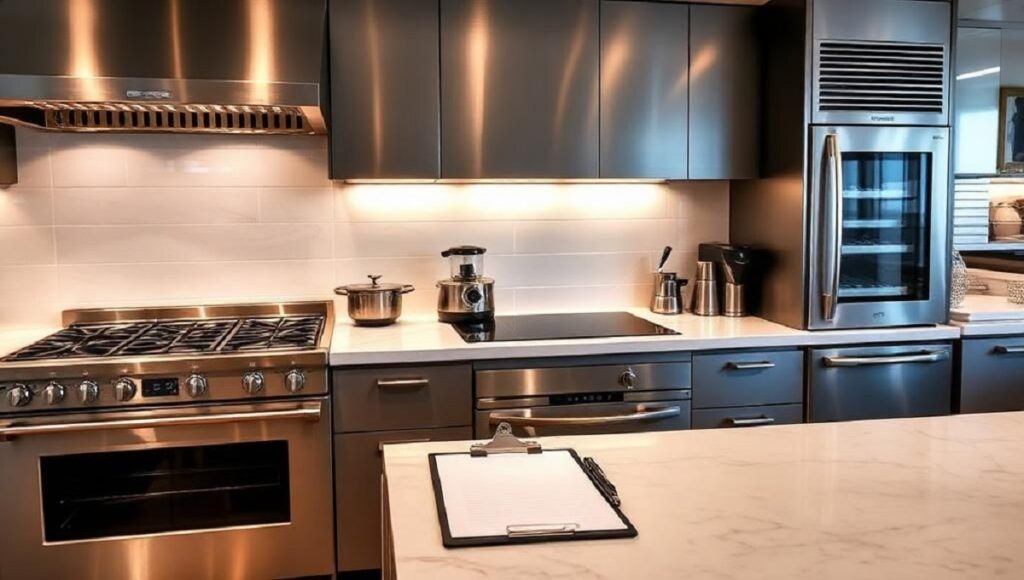
Choosing tools for a restaurant kitchen means thinking smart, not buying everything. It is about choosing the right items. When you choose wisely, you save money, space, and time. This also helps your kitchen team work smoothly.
Here are some simple steps to help you choose the correct tools.
⮞ Understand Your Menu First
Your menu decides what tools you need. For example:
| Restaurant Type | Main Tools Needed |
|---|---|
| Pizza Shop | Pizza oven, dough mixer, worktable |
| Bakery | Convection oven, proofing cabinet |
| Fast Food | Deep fryer, grill, freezer |
| Fine Dining | High-quality knives, range stove, sous vide tools |
Pose Example:
- Problem: You buy a fryer, but your menu has no fried food.
- Outcome: Money is wasted. Space is wasted.
- Solution: Review your menu first.
- Example: If you serve noodles, a large boiling stove is more useful than a fryer.
Your menu is your guide.
⮞ Measure Your Kitchen Space
A kitchen that is too crowded becomes unsafe and slow. Always measure your kitchen before buying equipment.
Tips:
- Leave walking space
- Do not block doors
- Keep equipment near work zones
COM (Clear, Organized, Meaningful):
- Clear layout
- Organized workflow
- Meaningful placement of equipment
Place items where they are used most.
For example, keep the refrigerator near the prep table.
⮞ Set a Budget
Restaurants need to control cost. Do not spend too much at the start. Begin with the must-have equipment. You can buy more items later.
Simple Budget Formula:
- Essential cooking items first
- Safety and cleaning tools second
- Storage and upgrades third
⮞ Check Material Quality
Good kitchen tools should last a long time. That’s why stainless steel is best.
Benefits of Stainless Steel:
- Strong
- Rust-free
- Easy to clean
- Looks professional
Never buy weak plastic items for heavy use.
⮞ Choose Energy-Efficient Equipment
Energy-efficient equipment uses less electricity or gas. This helps save money every month.
Look for labels like:
- “Energy Saving”
- “Low Gas Consumption”
- “Eco Efficient”
⮞ Check Warranty and Service
Always choose brands with good service support. If equipment breaks, you need quick repair.
Ask:
- How long is the warranty?
- Is spare parts service available?
Kitchen Layout for Easy Workflow
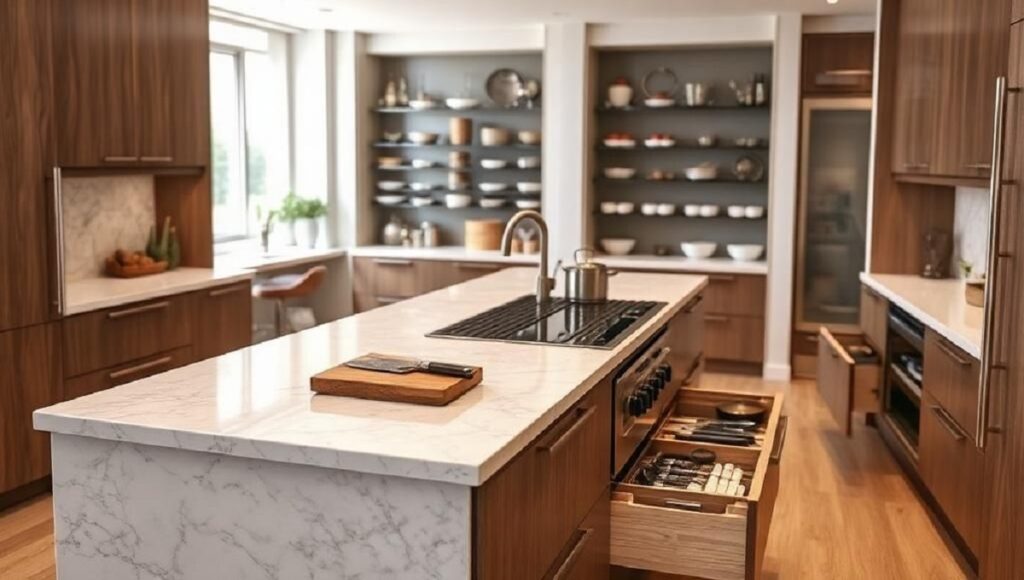
The layout of your kitchen is the map for movement. A good layout reduces tiredness and increases speed.
Here is a simple and effective kitchen workflow line:
Storage → Prep → Cook → Serve → Clean
Step-by-Step Workflow Example
- You take ingredients from the fridge (Storage)
- You wash and cut them (Prep)
- You cook the food (Cook)
- You plate and serve the food (Serve)
- You clean dishes and tools (Clean)
If this flow is smooth, your kitchen works fast.
Station Setup in a Restaurant Kitchen
A station is a small working area where one task is done.
| Station Name | Tools Needed | Purpose |
|---|---|---|
| Prep Station | Knives, boards, processor | Cut and prepare ingredients |
| Cooking Station | Stove, oven, grill | Cook the food |
| Dessert Station | Mixer, fridge, plates | Make desserts |
| Beverage Station | Juicer, coffee machine | Prepare drinks |
| Dishwashing Station | Sink, dishwasher | Clean plates and pans |
Stations help avoid confusion. Each worker knows what to do.
POSE Reminder
- Problem: Kitchen staff bump into each other. This slows cooking.
- Outcome: Customers wait too long. Bad reviews happen.
- Solution: Create clear stations and workflow paths.
- Example: One staff handles prep. One handles grill. One handles plating.
This keeps the kitchen calm and efficient.
Food Safety and Hygiene Rules
Food safety is very important. Unsafe kitchens can make customers sick.
Follow These Simple Rules
- Always wash hands before touching food.
- Wear gloves when touching ready-to-eat items.
- Keep hair tied or covered.
- Keep raw meat away from cooked food.
- Use sanitizer on tables.
Temperature Rules
| Food Type | Safe Temperature |
|---|---|
| Cold Food | Below 5°C |
| Hot Food | Above 60°C |
Typical errors to skip when starting a restaurant kitchen.
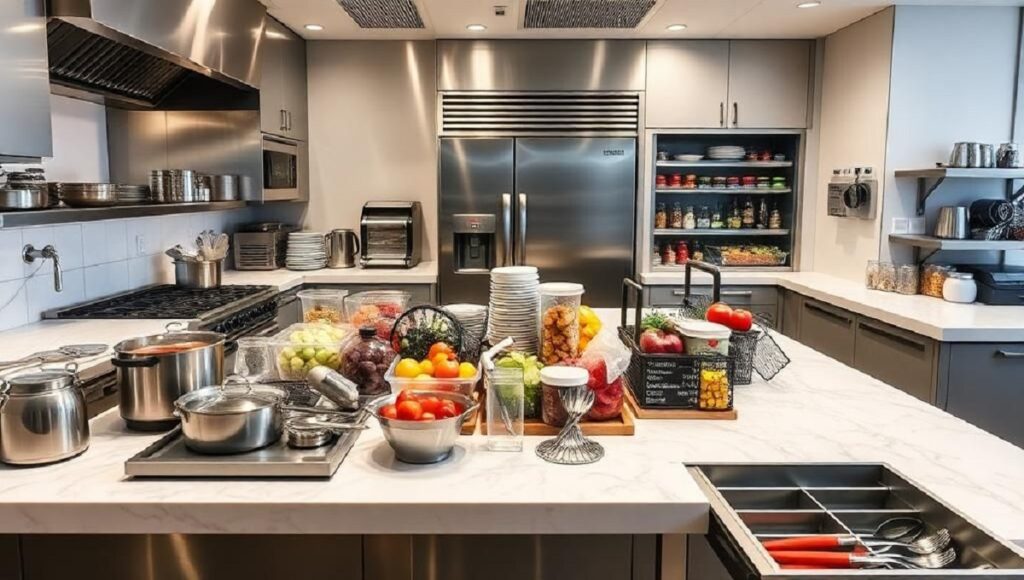
Many new restaurant owners make mistakes when buying equipment for a restaurant kitchen. These mistakes can waste money, time, and space. Let’s look at common issues and how to avoid them.
⏩ Buying Too Much Equipment
Some owners think they need every tool. This is not true. Start small and add more later.
Pose Example:
- Problem: Kitchen is full of unused machines.
- Outcome: Less working space. Slow movement.
- Solution: Buy only what you need for your menu.
- Example: If you do not bake, you do not need a big bakery oven.
⏩ Choosing Cheap Equipment
Cheap tools may break quickly. This leads to repair or replacement costs.
Better Choice:
Buy strong and durable equipment, especially for:
- Stove
- Oven
- Refrigerator
- Knives
These are used daily. They must last long.
⏩ Not Planning Layout
If equipment is placed randomly, the kitchen becomes hard to work in.
Fix:
Create a workflow plan before placing equipment.
Simple Layout Reminder:
Storage → Prep → Cook → Serve → Clean
This keeps movement easy.
⏩ Ignoring Cleaning and Maintenance
Every equipment needs cleaning. If not cleaned, bacteria grows. Equipment becomes slow and unsafe.
Tip:
Make a daily cleaning schedule and follow it.
Example Cleaning Routine:
| Equipment | Cleaning Frequency | Notes |
|---|---|---|
| Stove | Daily | Remove oil and crumbs |
| Refrigerator | Weekly | Check odor and wipe shelves |
| Cutting Boards | Every Use | Wash and sanitize |
| Floors | Daily | Mop with sanitizer |
⏩ Not Training Staff
Even good equipment is useless if staff don’t know how to use it.
Solution:
Train your team. Show:
- How to turn equipment on and off
- How to clean each item
- How to store ingredients safely
COM Reminder:
Clear instructions. Organized steps. Meaningful practice.
Maintenance Tips to Keep Equipment Working Longer
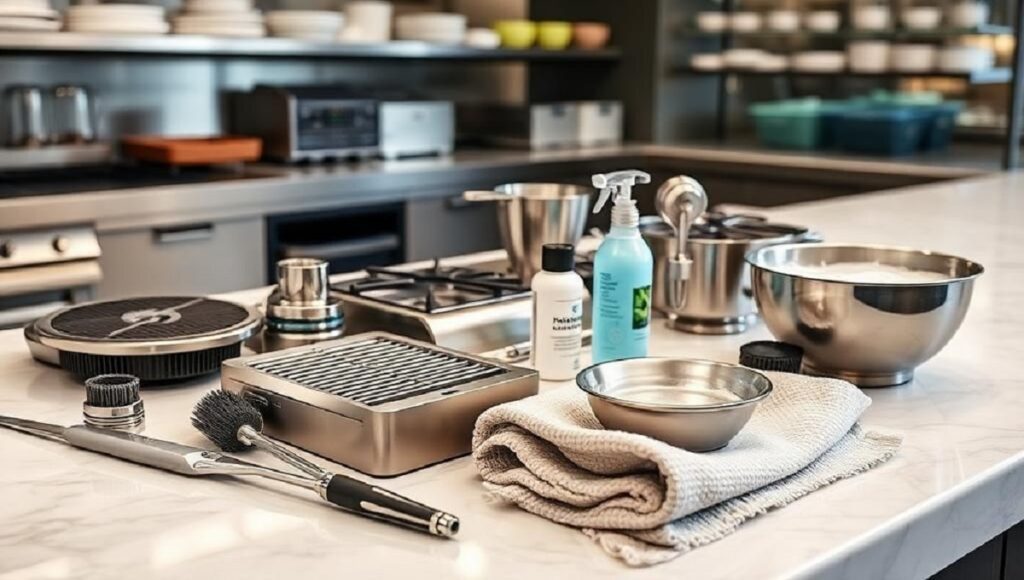
Proper care increases machine life. This saves money and keeps your kitchen working safely.
Daily Maintenance
- Wipe surfaces with warm soapy water
- Sanitize prep tables
- Check refrigerator temperature
- Wash knives and store them dry
Weekly Maintenance
- Deep clean oven and stove burners
- Wash shelves and storage bins
- Sharpen knives
Monthly Maintenance
- Check all plugs and gas pipes
- Repair loose screws or broken handles
Ingredients for Long Equipment Life:
- Clean daily
- Store properly
- Repair early
- Do not overload machines
A Real-Life Example
Let’s say you are opening a small restaurant serving rice bowls and fried snacks.
Menu:
- Rice bowls
- Chicken fry
- Vegetable sides
Minimum Required Equipment:
| Equipment | Purpose |
|---|---|
| Rice Cooker | Cook rice fast |
| Deep Fryer | Fry chicken and snacks |
| Cutting Board & Knives | Cut vegetables and meat |
| Refrigerator | Keep ingredients fresh |
| Prep Table | To prepare food |
| Serving Station | Serve orders quickly |
Pose Example (Real Situation)
Problem: You want to fry chicken and vegetables. You use a small home frying pan.
Outcome: Cooking takes long, oil burns, taste becomes poor.
Solution: Buy a commercial deep fryer.
Example: A 2-tank fryer cooks more food at once and keeps oil clean longer.
COM Example (Clear – Organized – Meaningful)
Clear: Use one station for cutting.
Organized: Keep ingredients in sealed boxes.
Meaningful: Clean tools before and after use.
This helps create a professional kitchen flow.
Ingredients Table for a Smooth Kitchen Operation
| Ingredient (Element) | Why It Matters |
|---|---|
| Heat Source (Stove/Oven) | For cooking food |
| Cold Storage (Refrigerator) | To keep ingredients fresh |
| Prep Tools (Knives/Boards) | To cut and prepare items |
| Work Space (Tables/Shelves) | To stay organized |
| Cleaning Tools (Dishwasher/Sinks) | To stay hygienic |
Frequently Asked Questions (FAQs)
Many new restaurant owners often ask the same questions about kitchen equipment. Here are simple answers to help guide you.
1. What is the most important equipment in a restaurant kitchen?
The most important equipment is the stove or cooking range. This is because almost all dishes require heat. Without a stove, cooking becomes slow and difficult.
Other important tools include:
- Refrigerator (for fresh ingredients)
- Knives and cutting boards (for prep work)
- Work tables (for mixing and assembling)
These tools form the core of any kitchen.
2. How much equipment do I need to start a small restaurant?
You do not need too many items at the start. Begin with the basic essentials:
| Item | Use |
|---|---|
| Stove or Range | Cooking |
| Refrigerator | Keep ingredients fresh |
| Knives and Cutting Boards | Prepare food |
| Fryer (if frying items) | Fry foods |
| Work Table | Prep space |
| Dishwasher or Sink Setup | Cleaning |
After your business grows, you can add more equipment.
3. Should I buy new or second-hand equipment?
Both options can work well.
New Equipment:
- Comes with warranty
- Lasts longer
- More expensive
Used Equipment:
- Cheaper price
- But check carefully for damage
Tip:
Buy refrigerators and stoves new, but you can buy shelves and prep tables used.
4. How do I keep kitchen equipment clean?
Cleaning should be done on a daily routine.
Simple Cleaning Steps:
- Wipe stove and oven after each day.
- Wash knives and boards after each use.
- Mop the floor daily.
- Sanitize prep tables every few hours.
- Check refrigerator smell and temperature regularly.
Important:
Always use food-safe sanitizer, not normal bathroom cleaner.
5. How can I keep food safe from bacteria?
Food safety is very important. Here are key rules:
- Store raw and cooked food separately.
- Always wash hands before touching food.
- Keep cold foods cold (below 5°C).
- Keep hot foods hot (above 60°C).
- Never leave food sitting outside for more than 2 hours.
Using a thermometer helps maintain safe temperatures.
6. What happens if kitchen equipment is not maintained?
If you do not clean and maintain equipment, problems can happen:
- Food can become unsafe.
- Machines can break.
- Cooking becomes slow.
- You may lose money on repairs.
Solution:
Follow daily and weekly cleaning routines. Repair early. Never wait too long.
More Deep Dive: Setting Up Work Stations
A station is a specific work area for one task. It helps keep the kitchen organized.
Prep Station
Used to prepare ingredients before cooking.
Tools needed:
- Knives
- Cutting boards
- Containers
- Bowls
- Food processor
Pose Example:
- Problem: Cutting ingredients at cooking station.
- Outcome: Crowded area and mistakes.
- Solution: Separate prep station.
- Example: One staff cuts vegetables while another cooks.
Cooking Station
This is where the main heat equipment stays.
Tools:
- Stove or range
- Oven
- Grill or griddle
- Pans and pots
- Cooking utensils
Keep spices and oils close to this station.
Plating and Serving Station
This is where food is arranged before delivery to the customer.
Tools:
- Plates and bowls
- Napkins
- Garnish ingredients
- Heat lamp (keeps food warm)
This area must stay very clean.
Dishwashing Station
Used to clean tools, plates, and equipment.
Tools:
- Three-compartment sink or dishwasher
- Drying rack
- Cleaning soap and sanitizer
Place this station away from food prep areas to avoid contamination.
Real Example Kitchen Flow
Imagine you receive an order for fried chicken with rice:
- Refrigeration Station: Get chicken and vegetables.
- Prep Station: Cut vegetables, season chicken.
- Cooking Station: Cook rice in rice cooker; fry chicken in fryer.
- Plating Station: Arrange rice, chicken, garnish.
- Serving: Send to customer.
- Cleaning Station: Wash used pots and dishes.
Conclusion: Build a Kitchen That Works for You
Picking the right restaurant kitchen tools is more than just buying machines. It is about planning a system that helps your team work faster, cook better, and keep food safe. Each restaurant is unique, so pick kitchen tools that fit your menu, space, and budget.